
Hello All,
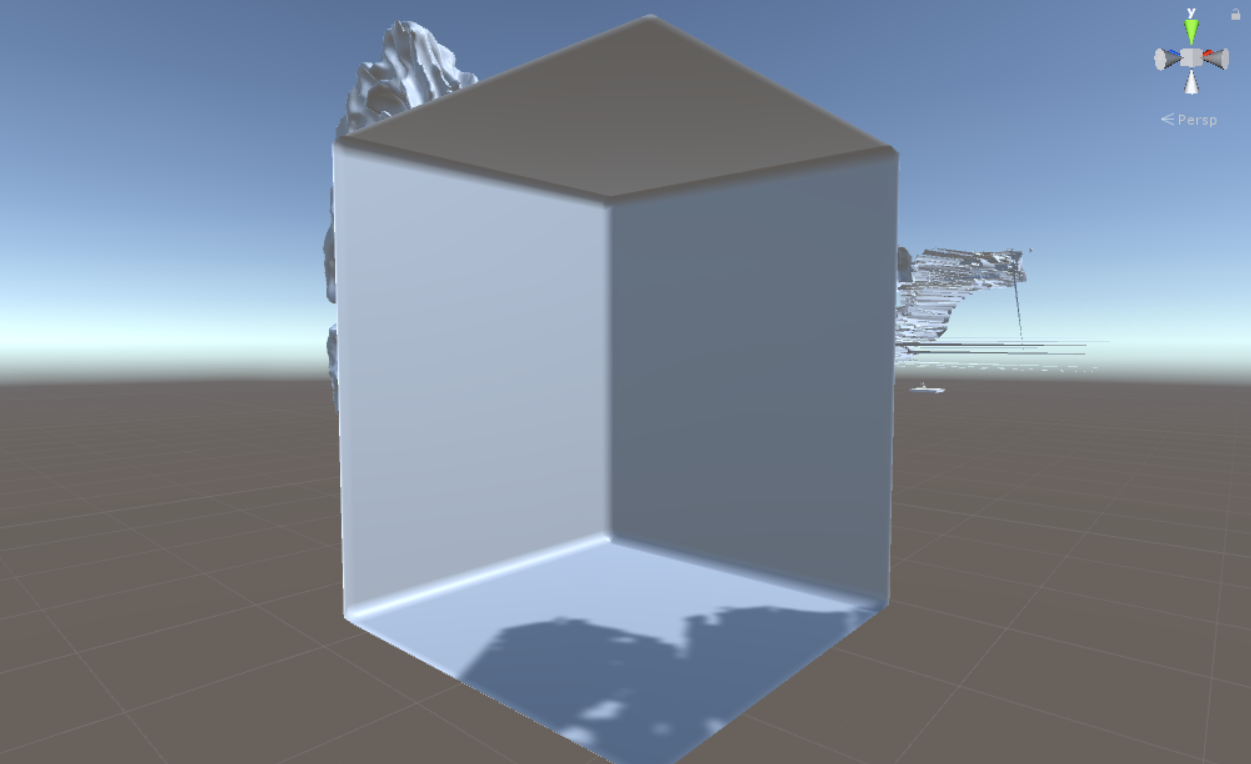
I have been attempting to convert Label files generated using mri_annotation2label into surface files for use in external programs. In order to do this I first need to convert the label files into freesurfer binary. I have attempted to use the mri_label2vol function to generate an mgz file which could then be converted into freesurfer binary but this has resulted in mgz files which depict a solid cube rather than any brain structure. Any ideas as to why this could be?
I would also prefer to avoid ever converting the label files to a volume as converting the volume file to a surface file results in a lower quality than if the file has been maintained as a surface file throughout. Is there any way to use the Desikan Atlas to "divide" say the lh.pial surface file and generate a number of .pial files each consisting of one of the regions described by the Desikan Atlas?
Thanks, Zachary Humphrey

Hi Zach
I think if you cut and flatten the cortical part of the surfaces, convert tha .annot files to separate label files, you can then use label2flat on each label to generate a flattened patch that is just taht label. I haven't used it in years (decades?), but I think it should work
cheers Bruce On Tue, 8 Aug 2017, Zach Humphrey wrote:
Hello All, I have been attempting to convert Label files generated using mri_annotation2label into surface files for use in external programs. In order to do this I first need to convert the label files into freesurfer binary. I have attempted to use the mri_label2vol function to generate an mgz file which could then be converted into freesurfer binary but this has resulted in mgz files which depict a solid cube rather than any brain structure. Any ideas as to why this could be?
I would also prefer to avoid ever converting the label files to a volume as converting the volume file to a surface file results in a lower quality than if the file has been maintained as a surface file throughout. Is there any way to use the Desikan Atlas to "divide" say the lh.pial surface file and generate a number of .pial files each consisting of one of the regions described by the Desikan Atlas?
Thanks, Zachary Humphrey
Hello Dr. Fischl,
Thanks for the feedback. Can the flattened patches be "re-inflated" into surface files again after being flattened?
I am also continuing to run into the issue with the label2vol function where I end up with a volume that is completely filled. The steps I have been following to reach this point are 1: Run mri_annotation2label --subject subjectname --hemi lh --outdir out 2: mri_label2vol --label $labelgeneratedfromstep1 --temp rawavg.mgz --subject subjectname --hemi lh --o outputdirectory --fillthresh .3 --reg register.dat --proj frac 0 1 .1 Honestly I am not sure what the --proj field actually means and so I have been just using the 0 1 .1 that I found in examples of mri_label2vol. Could this be the problem?
Thanks, Zachary Humphrey
On Tue, Aug 8, 2017 at 3:51 PM, Bruce Fischl fischl@nmr.mgh.harvard.edu wrote:
Hi Zach
I think if you cut and flatten the cortical part of the surfaces, convert tha .annot files to separate label files, you can then use label2flat on each label to generate a flattened patch that is just taht label. I haven't used it in years (decades?), but I think it should work
cheers Bruce
On Tue, 8 Aug 2017, Zach Humphrey wrote:
Hello All,
I have been attempting to convert Label files generated using mri_annotation2label into surface files for use in external programs. In order to do this I first need to convert the label files into freesurfer binary. I have attempted to use the mri_label2vol function to generate an mgz file which could then be converted into freesurfer binary but this has resulted in mgz files which depict a solid cube rather than any brain structure. Any ideas as to why this could be?
I would also prefer to avoid ever converting the label files to a volume as converting the volume file to a surface file results in a lower quality than if the file has been maintained as a surface file throughout. Is there any way to use the Desikan Atlas to "divide" say the lh.pial surface file and generate a number of .pial files each consisting of one of the regions described by the Desikan Atlas?
Thanks, Zachary Humphrey
Freesurfer mailing list Freesurfer@nmr.mgh.harvard.edu https://mail.nmr.mgh.harvard.edu/mailman/listinfo/freesurfer
The information in this e-mail is intended only for the person to whom it is addressed. If you believe this e-mail was sent to you in error and the e-mail contains patient information, please contact the Partners Compliance HelpLine at http://www.partners.org/complianceline . If the e-mail was sent to you in error but does not contain patient information, please contact the sender and properly dispose of the e-mail.
Here I have attached a picture of what the output volume looks like after running the above commands: [image: Inline image 1]
On Fri, Aug 11, 2017 at 11:07 AM, Zach Humphrey achilles.zach@gmail.com wrote:
Hello Dr. Fischl,
Thanks for the feedback. Can the flattened patches be "re-inflated" into surface files again after being flattened?
I am also continuing to run into the issue with the label2vol function where I end up with a volume that is completely filled. The steps I have been following to reach this point are 1: Run mri_annotation2label --subject subjectname --hemi lh --outdir out 2: mri_label2vol --label $labelgeneratedfromstep1 --temp rawavg.mgz --subject subjectname --hemi lh --o outputdirectory --fillthresh .3 --reg register.dat --proj frac 0 1 .1 Honestly I am not sure what the --proj field actually means and so I have been just using the 0 1 .1 that I found in examples of mri_label2vol. Could this be the problem?
Thanks, Zachary Humphrey
On Tue, Aug 8, 2017 at 3:51 PM, Bruce Fischl fischl@nmr.mgh.harvard.edu wrote:
Hi Zach
I think if you cut and flatten the cortical part of the surfaces, convert tha .annot files to separate label files, you can then use label2flat on each label to generate a flattened patch that is just taht label. I haven't used it in years (decades?), but I think it should work
cheers Bruce
On Tue, 8 Aug 2017, Zach Humphrey wrote:
Hello All,
I have been attempting to convert Label files generated using mri_annotation2label into surface files for use in external programs. In order to do this I first need to convert the label files into freesurfer binary. I have attempted to use the mri_label2vol function to generate an mgz file which could then be converted into freesurfer binary but this has resulted in mgz files which depict a solid cube rather than any brain structure. Any ideas as to why this could be?
I would also prefer to avoid ever converting the label files to a volume as converting the volume file to a surface file results in a lower quality than if the file has been maintained as a surface file throughout. Is there any way to use the Desikan Atlas to "divide" say the lh.pial surface file and generate a number of .pial files each consisting of one of the regions described by the Desikan Atlas?
Thanks, Zachary Humphrey
Freesurfer mailing list Freesurfer@nmr.mgh.harvard.edu https://mail.nmr.mgh.harvard.edu/mailman/listinfo/freesurfer
The information in this e-mail is intended only for the person to whom it is addressed. If you believe this e-mail was sent to you in error and the e-mail contains patient information, please contact the Partners Compliance HelpLine at http://www.partners.org/complianceline . If the e-mail was sent to you in error but does not contain patient information, please contact the sender and properly dispose of the e-mail.

On 08/08/2017 03:42 PM, Zach Humphrey wrote:
Hello All,
I have been attempting to convert Label files generated using mri_annotation2label into surface files for use in external programs. In order to do this I first need to convert the label files into freesurfer binary. I have attempted to use the mri_label2vol function to generate an mgz file which could then be converted into freesurfer binary but this has resulted in mgz files which depict a solid cube rather than any brain structure. Any ideas as to why this could be?
I don't understand what this means. Can you elaborate or share a pic?
I would also prefer to avoid ever converting the label files to a volume as converting the volume file to a surface file results in a lower quality than if the file has been maintained as a surface file throughout. Is there any way to use the Desikan Atlas to "divide" say the lh.pial surface file and generate a number of .pial files each consisting of one of the regions described by the Desikan Atlas?
Thanks, Zachary Humphrey
Freesurfer mailing list Freesurfer@nmr.mgh.harvard.edu https://mail.nmr.mgh.harvard.edu/mailman/listinfo/freesurfer
freesurfer@nmr.mgh.harvard.edu
-
 Bruce Fischl
 -
 Douglas N Greve
 -
 Zach Humphrey