
Dear Freesufer users,
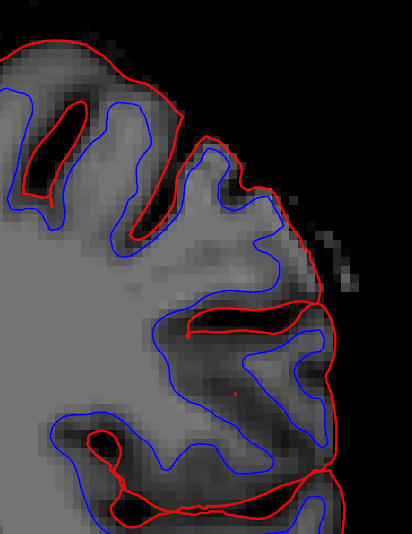
We have some T1 images having a rim of bright signal in the GM at some spots like the one showing in the attached Figure 1. The WM surface goes out to include this bright signal and the cortex ends up artificially thin. We followed the standard WM edit procedure, which is to erase the bright signal in wm.mgz. As shown in Figure 2, the bright rim is replaced with intensity 1 (red). However, that doesn't improve the situation. Does anyone know a way to prevent the surface from going out?
Thanks,


Hi Min
  that looks like it might be a normalization problem. Can you
  post the orig.mgz and see what it looks like? Is there a bright
  rim in it also?

  cheers
  Bruce
  On Wed, 16 Mar 2016, Min Liu wrote:

        Dear Freesufer users,
        We have some T1 images having a rim of bright signal
        in the GM at some spots
        like the one showing in the attached Figure 1.  The
        WM surface goes out to
        include this bright signal and the cortex ends up
        artificially thin.  We
        followed the standard WM edit procedure, which is to
        erase the bright signal
        in wm.mgz. As shown in Figure 2, the bright rim is
        replaced with intensity 1
        (red). However, that doesn't improve the situation.
        Does anyone know a way
        to prevent the surface from going out?

        Thanks,


        --
        Min
Dear Bruce,
Many thanks for looking into this. Here is the orig.mgz file. Location [184, 90, 93] is where I showed the figures. [188,105,114] is another example. Although the bright rim doesn't occur everywhere, it is mostly seen in the left hemisphere. I hope there is a way to counteract such acquisition defects.
Thanks, Min
On Wed, Mar 16, 2016 at 6:51 PM, Bruce Fischl fischl@nmr.mgh.harvard.edu wrote:
Hi Min
  that looks like it might be a normalization problem. Can you
  post the orig.mgz and see what it looks like? Is there a bright
  rim in it also?

  cheers
  Bruce
  On Wed, 16 Mar 2016, Min Liu wrote:

        Dear Freesufer users,
        We have some T1 images having a rim of bright signal
        in the GM at some spots
        like the one showing in the attached Figure 1.  The
        WM surface goes out to
        include this bright signal and the cortex ends up
        artificially thin.  We
        followed the standard WM edit procedure, which is to
        erase the bright signal
        in wm.mgz. As shown in Figure 2, the bright rim is
        replaced with intensity 1
        (red). However, that doesn't improve the situation.
        Does anyone know a way
        to prevent the surface from going out?

        Thanks,


        --
        Min
Freesurfer mailing list Freesurfer@nmr.mgh.harvard.edu https://mail.nmr.mgh.harvard.edu/mailman/listinfo/freesurfer
The information in this e-mail is intended only for the person to whom it is addressed. If you believe this e-mail was sent to you in error and the e-mail contains patient information, please contact the Partners Compliance HelpLine at http://www.partners.org/complianceline . If the e-mail was sent to you in error but does not contain patient information, please contact the sender and properly dispose of the e-mail.
Dear Bruce,
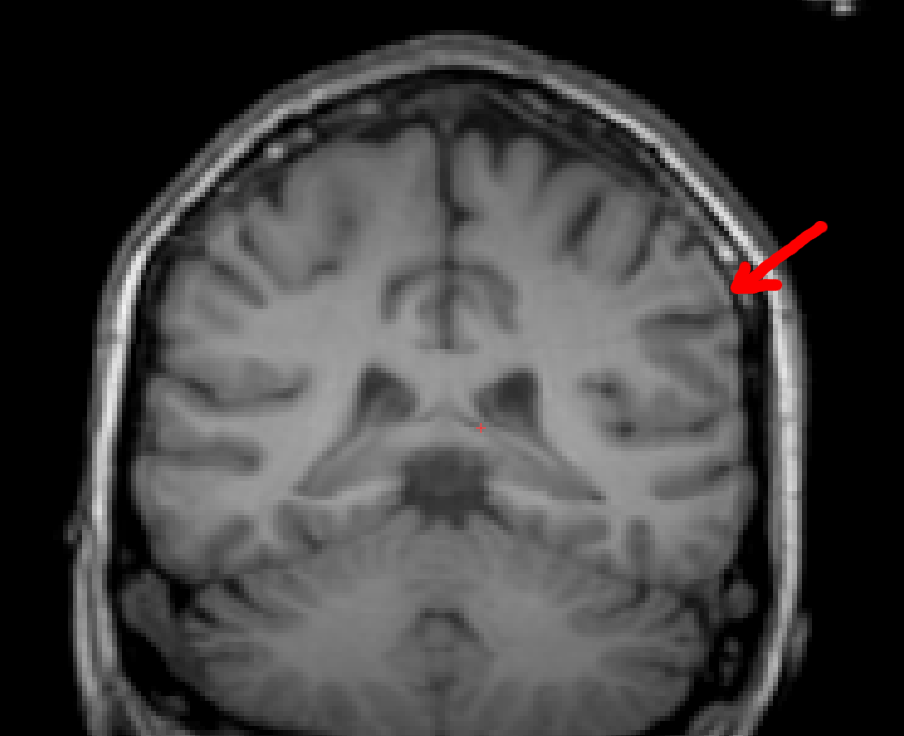
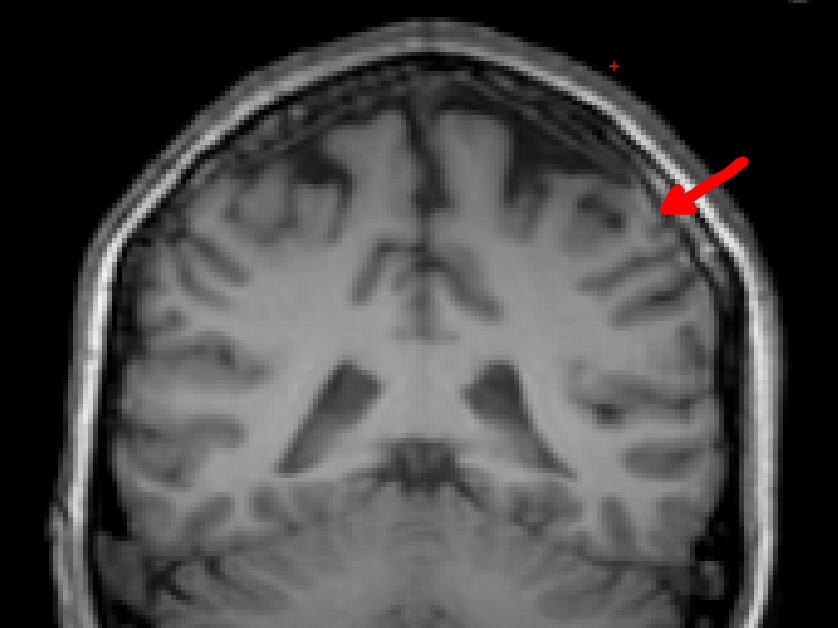
Many thanks for looking into this. I tried to post orig.mgz to the mailing list yesterday but the email didn't get through because the file size exceeds 1000KB. So I screen-captured two images to showcase the overall quality of T1 and where the problem is. Although the bright rim doesn't occur everywhere, it is mostly seen in the left hemisphere. I hope there is a way to counteract such acquisition defects.
Thanks, Min
On Wed, Mar 16, 2016 at 6:51 PM, Bruce Fischl fischl@nmr.mgh.harvard.edu wrote:
Hi Min
that looks like it might be a normalization problem. Can you post the orig.mgz and see what it looks like? Is there a bright rim in it also?
cheers Bruce
On Wed, 16 Mar 2016, Min Liu wrote:
Dear Freesufer users,
We have some T1 images having a rim of bright signal in the GM at some spots like the one showing in the attached Figure 1. The WM surface goes out to include this bright signal and the cortex ends up artificially thin. We followed the standard WM edit procedure, which is to erase the bright signal in wm.mgz. As shown in Figure 2, the bright rim is replaced with intensity 1 (red). However, that doesn't improve the situation. Does anyone know a way to prevent the surface from going out?
Thanks,
-- Min
Freesurfer mailing list Freesurfer@nmr.mgh.harvard.edu https://mail.nmr.mgh.harvard.edu/mailman/listinfo/freesurfer
The information in this e-mail is intended only for the person to whom it is addressed. If you believe this e-mail was sent to you in error and the e-mail contains patient information, please contact the Partners Compliance HelpLine at http://www.partners.org/complianceline . If the e-mail was sent to you in error but does not contain patient information, please contact the sender and properly dispose of the e-mail.
Hi Min
unfortunately there's not much we can do as these artifacts make the gray matter look just like white matter. Do you see this in many subjects?
sorry Bruce
On Thu, 17 Mar 2016, Min Liu wrote:
Dear Bruce, Many thanks for looking into this. I tried to post orig.mgz to the mailing list yesterday but the email didn't get through because the file size exceeds 1000KB. So I screen-captured two images to showcase the overall quality of T1 and where the problem is. Although the bright rim doesn't occur everywhere, it is mostly seen in the left hemisphere. I hope there is a way to counteract such acquisition defects.
Thanks, Min
On Wed, Mar 16, 2016 at 6:51 PM, Bruce Fischl fischl@nmr.mgh.harvard.edu wrote: Hi Min
that looks like it might be a normalization problem. Can you post the orig.mgz and see what it looks like? Is there a bright rim in it also? cheers Bruce On Wed, 16 Mar 2016, Min Liu wrote: Dear Freesufer users, We have some T1 images having a rim of bright signal in the GM at some spots like the one showing in the attached Figure 1. The WM surface goes out to include this bright signal and the cortex ends up artificially thin. We followed the standard WM edit procedure, which is to erase the bright signal in wm.mgz. As shown in Figure 2, the bright rim is replaced with intensity 1 (red). However, that doesn't improve the situation. Does anyone know a way to prevent the surface from going out? Thanks, -- Min
Freesurfer mailing list Freesurfer@nmr.mgh.harvard.edu https://mail.nmr.mgh.harvard.edu/mailman/listinfo/freesurfer
The information in this e-mail is intended only for the person to whom it is addressed. If you believe this e-mail was sent to you in error and the e-mail contains patient information, please contact the Partners Compliance HelpLine at http://www.partners.org/complianceline . If the e-mail was sent to you in error but does not contain patient information, please contact the sender and properly dispose of the e-mail.
-- Min
Dear Bruce,
Thank you very much for your reply. I think we will discard these subjects for the analyses.
Thanks, Min
On Thu, Mar 17, 2016 at 9:53 AM, Bruce Fischl fischl@nmr.mgh.harvard.edu wrote:
Hi Min
unfortunately there's not much we can do as these artifacts make the gray matter look just like white matter. Do you see this in many subjects?
sorry Bruce
On Thu, 17 Mar 2016, Min Liu wrote:
Dear Bruce,
Many thanks for looking into this. I tried to post orig.mgz to the mailing list yesterday but the email didn't get through because the file size exceeds 1000KB. So I screen-captured two images to showcase the overall quality of T1 and where the problem is. Although the bright rim doesn't occur everywhere, it is mostly seen in the left hemisphere. I hope there is a way to counteract such acquisition defects.
Thanks, Min
On Wed, Mar 16, 2016 at 6:51 PM, Bruce Fischl <fischl@nmr.mgh.harvard.edu
wrote: Hi Min
that looks like it might be a normalization problem. Can you post the orig.mgz and see what it looks like? Is there a bright rim in it also? cheers Bruce On Wed, 16 Mar 2016, Min Liu wrote: Dear Freesufer users, We have some T1 images having a rim of bright signal in the GM at some spots like the one showing in the attached Figure 1. The WM surface goes out to include this bright signal and the cortex ends up artificially thin. We followed the standard WM edit procedure, which is to erase the bright signal in wm.mgz. As shown in Figure 2, the bright rim is replaced with intensity 1 (red). However, that doesn't improve the situation. Does anyone know a way to prevent the surface from going out? Thanks, -- Min
Freesurfer mailing list Freesurfer@nmr.mgh.harvard.edu https://mail.nmr.mgh.harvard.edu/mailman/listinfo/freesurfer
The information in this e-mail is intended only for the person to whom it is addressed. If you believe this e-mail was sent to you in error and the e-mail contains patient information, please contact the Partners Compliance HelpLine at http://www.partners.org/complianceline . If the e-mail was sent to you in error but does not contain patient information, please contact the sender and properly dispose of the e-mail.
-- Min
Freesurfer mailing list Freesurfer@nmr.mgh.harvard.edu https://mail.nmr.mgh.harvard.edu/mailman/listinfo/freesurfer
The information in this e-mail is intended only for the person to whom it is addressed. If you believe this e-mail was sent to you in error and the e-mail contains patient information, please contact the Partners Compliance HelpLine at http://www.partners.org/complianceline . If the e-mail was sent to you in error but does not contain patient information, please contact the sender and properly dispose of the e-mail.
freesurfer@nmr.mgh.harvard.edu
-
 Bruce Fischl
 -
 Min Liu