
Hi all,
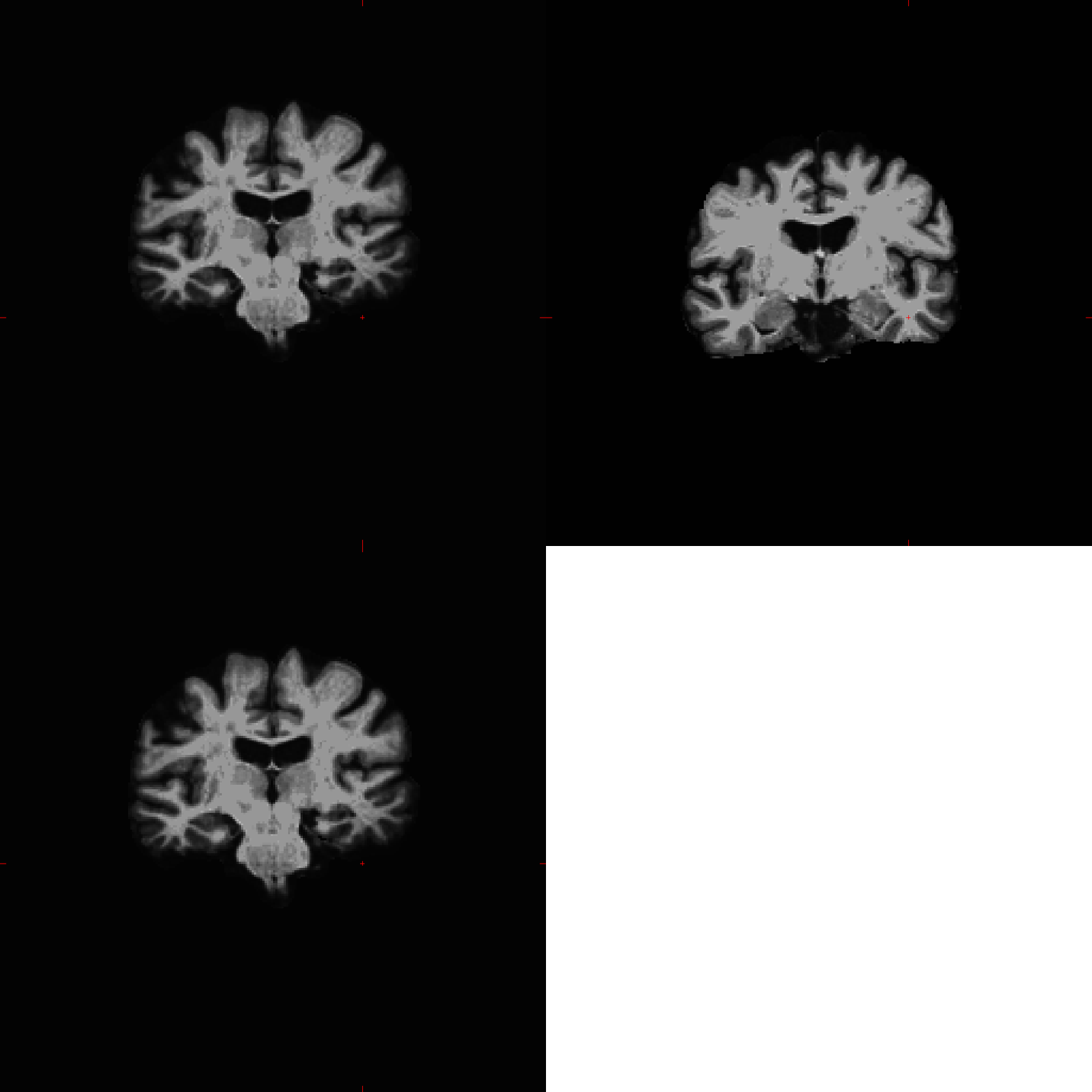
We used the longitudinal processing for our phase 2 data. For some subjects, I found very bad segmentation and surface reconstructions. Suspecting it's a registration problem, I loaded brainmask.mgz from tp1 and tp2 in tkmedit. I could see they are not aligned to each other (attached image).
My questions are: 1. Is the problem due to registration? If yes, how can I fix it? 2. If we are to edit the segmentation results from "-long" processing, do we follow the same steps as what we did for tp1?
Thanks, Zheng Hui

Zheng
The tp1 and tp2 brainmask.mgz files will not be aligned as viewed in tkmedit unless you load the tp2_to_tp1.lta tranform found in subject tp2's mri/tranform directory. Or, in tp'2 mri dir, you can load the orig.mgz and another file called something like orig_tp1_to_tp2.long.tp1.mgz and those should be in register so flipping between the two should be aligned.
Did tp1's cross-sectional scans process correctly? Those need to be correct before their associated tp2 scans can be processed longitudinally, and generally you should not need edits for tp2.
Nick
On Fri, 2009-03-06 at 15:27 +0800, gmszh wrote:
Hi all,
We used the longitudinal processing for our phase 2 data. For some subjects, I found very bad segmentation and surface reconstructions. Suspecting it's a registration problem, I loaded brainmask.mgz from tp1 and tp2 in tkmedit. I could see they are not aligned to each other (attached image).
My questions are:
- Is the problem due to registration? If yes, how can I fix it?
- If we are to edit the segmentation results from "-long" processing, do we
follow the same steps as what we did for tp1?
Thanks, Zheng Hui
Freesurfer mailing list Freesurfer@nmr.mgh.harvard.edu https://mail.nmr.mgh.harvard.edu/mailman/listinfo/freesurfer
freesurfer@nmr.mgh.harvard.edu
-
 gmszh
gmszh -
 Nick Schmansky