
Hi,
I am having trouble with the projfrac option in mri_label2vol (on the current dev freesurfer environment). When I use the following command:
mri_label2vol --annot label/lh.lang.annot --subject nmr00937 --o lang_seg.mgz --hemi lh --identity --temp mri/T1.mgz --proj frac 0 1 .01
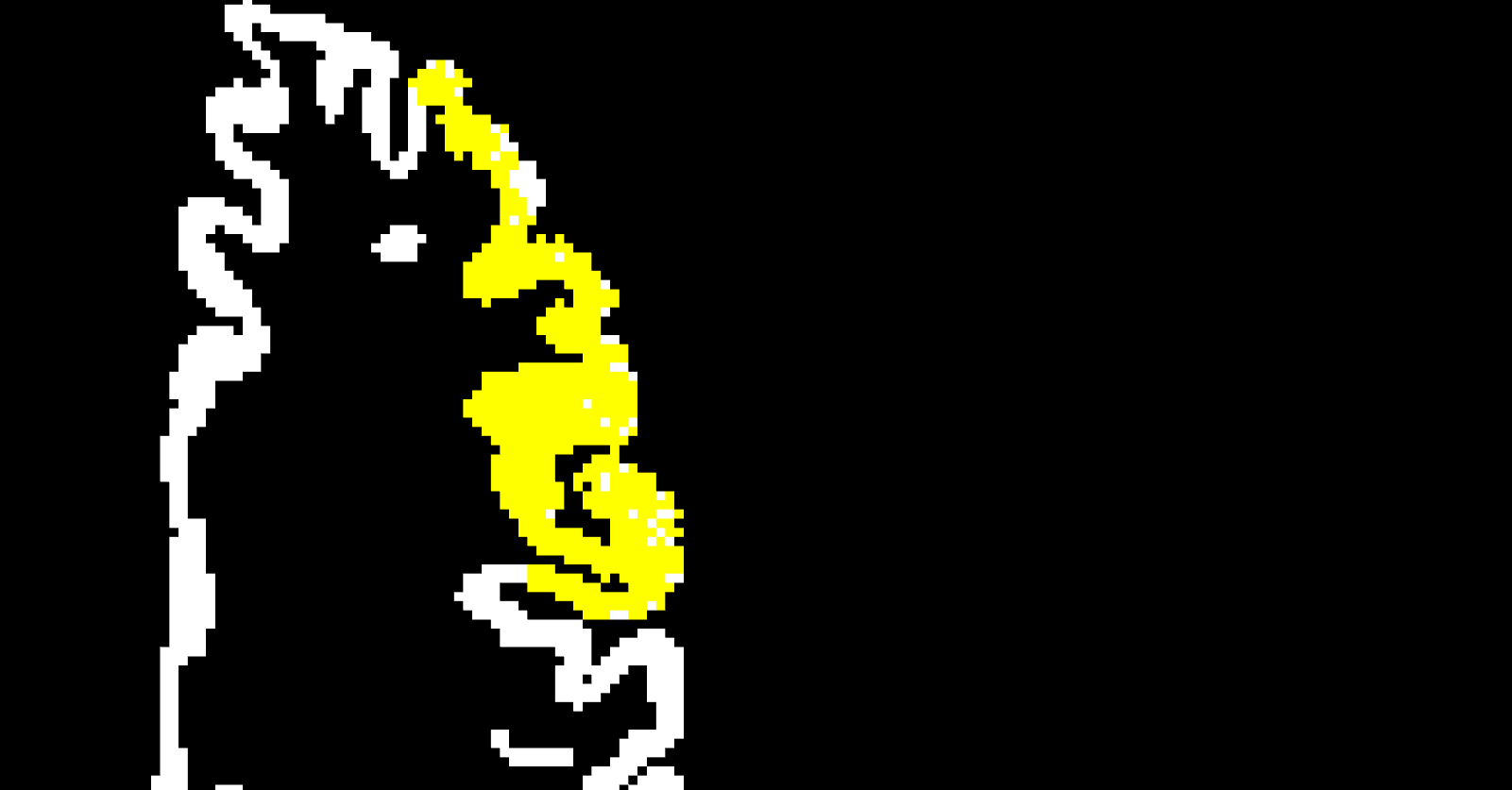
I get many missed voxels from the gray matter (see the attached image, with the yellow representing the label overlaid on the ribbon.mgz). I have tried more extreme delta values and this doesn't help. (note scrolling to nearby slices indicates the neighboring voxels are included, so it isn't from the angle projecting oddly (that is why I took a slice from the middle of this large label)). Is there a better way to convert the annotation to a volume just in the gray matter, but including all of the relevant voxels?
Is there a fundamental algorithmic difference between mris_volmask and mri_label2vol?
If yes, why?
Thanks, D
Hi,
I just wanted to repost this question. After turning on the transparency, I also noticed that this problem goes both directions (i.e. some voxels which aren't gray matter in the lh.ribbon.mgz are labeled utilized when calling mri_label2vol.
On Tue, Feb 23, 2016 at 3:19 PM, dgw dgwakeman@gmail.com wrote:
Hi,
I am having trouble with the projfrac option in mri_label2vol (on the current dev freesurfer environment). When I use the following command:
mri_label2vol --annot label/lh.lang.annot --subject nmr00937 --o lang_seg.mgz --hemi lh --identity --temp mri/T1.mgz --proj frac 0 1 .01
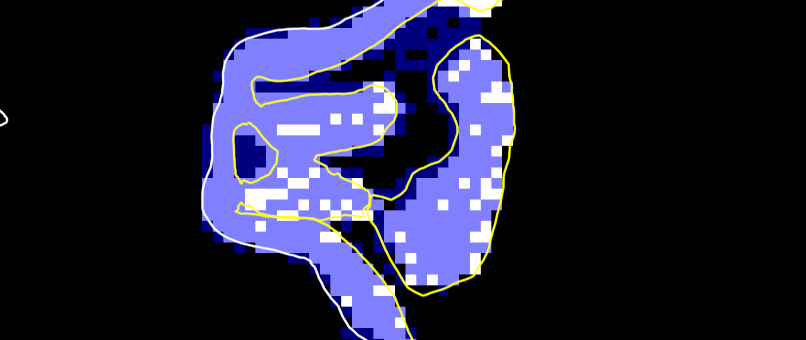
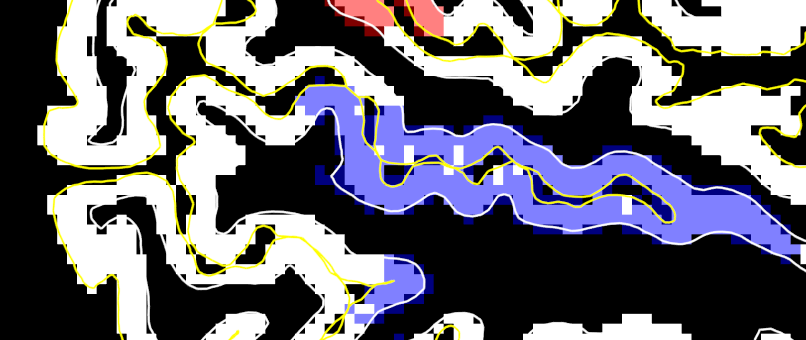
I get many missed voxels from the gray matter (see the attached image, with the yellow representing the label overlaid on the ribbon.mgz). I have tried more extreme delta values and this doesn't help. (note scrolling to nearby slices indicates the neighboring voxels are included, so it isn't from the angle projecting oddly (that is why I took a slice from the middle of this large label)). Is there a better way to convert the annotation to a volume just in the gray matter, but including all of the relevant voxels?
Is there a fundamental algorithmic difference between mris_volmask and mri_label2vol?
If yes, why?
Thanks, D
Hi,
I just wanted to post back the problem was solved (Thanks Doug). The solution is this:
1. use mri_aparc2aseg mri_aparc2aseg --s $SUBJECT --o <filename>.mgz --annot <annot_name> --annot-table <clut_file>
[Note, in my case I was using 3 different values, 1, 2, 3 for the labels with only left hemisphere labels (the details will change for people with different label numbers etc.)] 2. read in the resulting file (python or matlab: pick your poison). set all voxels less than 1001 to 0, set all voxels greater than 1003 to 0, remap voxels with value 1001 to 1, 1002 to 2 1003 to 3.
Now you are done and can load with your clut file.
hth d
On Mon, Feb 29, 2016 at 2:16 PM, dgw dgwakeman@gmail.com wrote:
Hi,
I just wanted to repost this question. After turning on the transparency, I also noticed that this problem goes both directions (i.e. some voxels which aren't gray matter in the lh.ribbon.mgz are labeled utilized when calling mri_label2vol.
On Tue, Feb 23, 2016 at 3:19 PM, dgw dgwakeman@gmail.com wrote:
Hi,
I am having trouble with the projfrac option in mri_label2vol (on the current dev freesurfer environment). When I use the following command:
mri_label2vol --annot label/lh.lang.annot --subject nmr00937 --o lang_seg.mgz --hemi lh --identity --temp mri/T1.mgz --proj frac 0 1 .01
I get many missed voxels from the gray matter (see the attached image, with the yellow representing the label overlaid on the ribbon.mgz). I have tried more extreme delta values and this doesn't help. (note scrolling to nearby slices indicates the neighboring voxels are included, so it isn't from the angle projecting oddly (that is why I took a slice from the middle of this large label)). Is there a better way to convert the annotation to a volume just in the gray matter, but including all of the relevant voxels?
Is there a fundamental algorithmic difference between mris_volmask and mri_label2vol?
If yes, why?
Thanks, D
freesurfer@nmr.mgh.harvard.edu
-
 dgw
dgw