
Hello everyone!
Normally, I use Freesurfer on studies where the MRI scans are all taken with the same voxel parameters and , thus, all have the same image dimensions. However, now I am using a data set where I am presented with two different types of image dimensions and I unsure of the size limitations that Freesurfer can process while still being analytically viable.
My understanding is that Freesurfer warps the image to fit the registration, but if the dimensions are too small to begin with, wouldn't that cause a lot of generalized pixels that could be inaccurate or cause fuzzy detail?
The more I thought about this dilemma, the more I thought that giving Freesurfer the largest image possible would allow it to shrink it to whatever is most necessary for the registration and would, thus, maintain as much detail as possible for segmentation. However, I just couldn't find a defined limit as to the smallest image that Freesurfer could accurately segment.
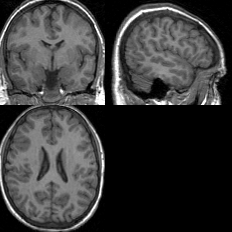
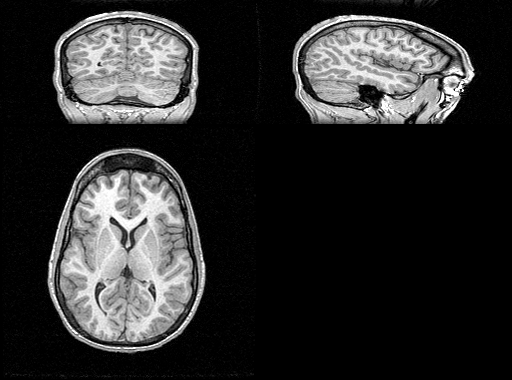
So, from this train of thought, here is my question: Would it be problematic to have Freesurfer process both of the example scans attached to this e-mail and then use the processed brains in the same analysis? The images attached are titled for their x , y, and z dimensions respectably. Any help or advice people could provide would be greatly appreciated.
Hope all is well, Jeff
freesurfer@nmr.mgh.harvard.edu
-
 Jeffrey Crawford