
Hello,
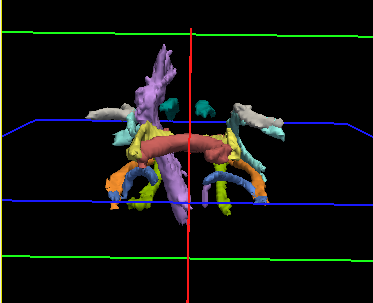
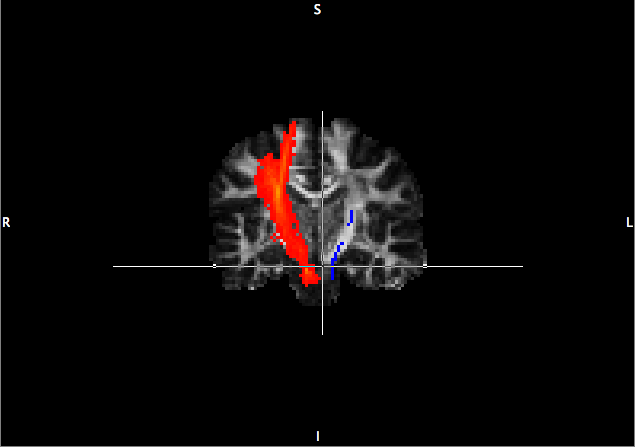
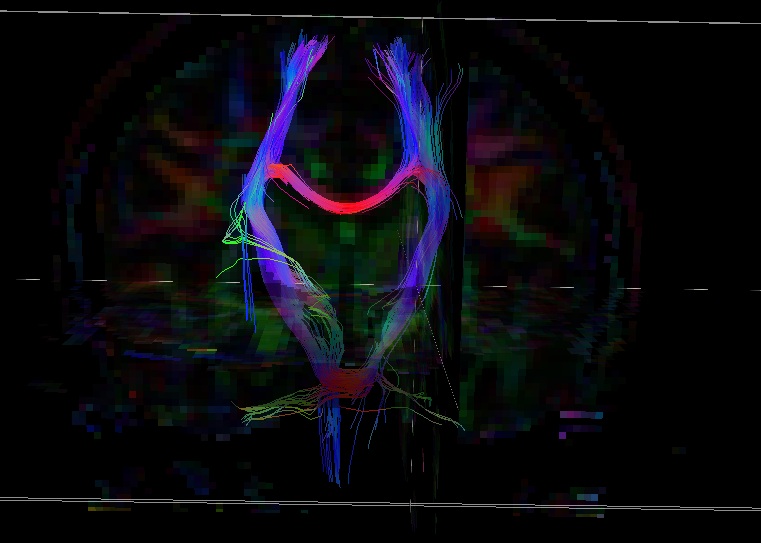
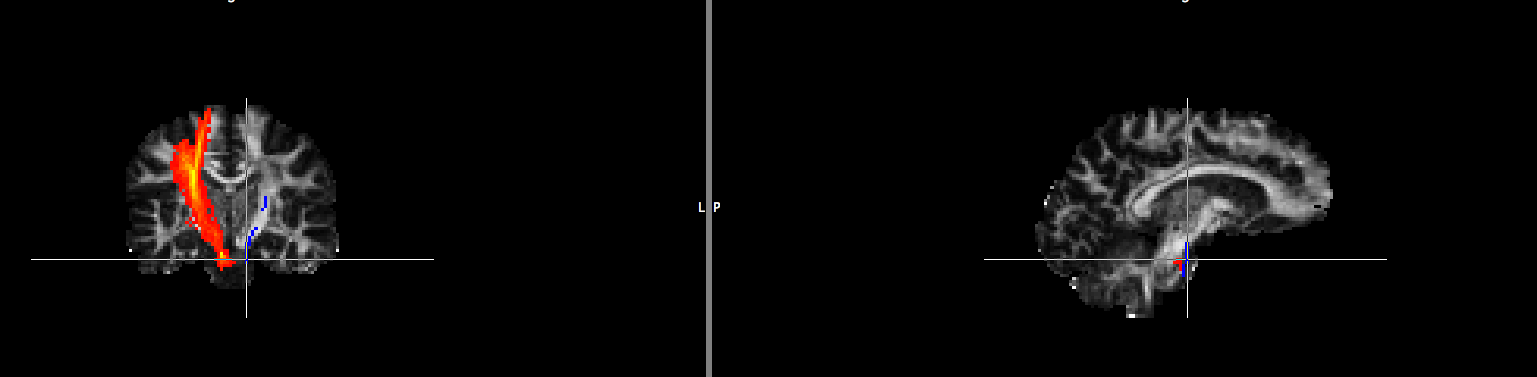
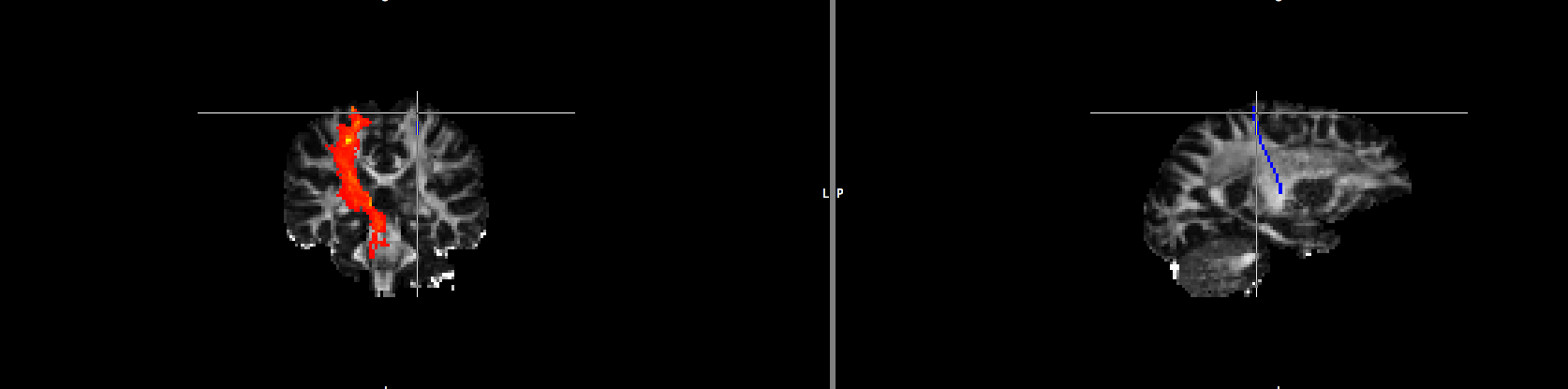
The segmented left CST tracts of one of our 3T data was not satisfactory, which has only few voxels with 1000 gray values (see attached snapshot pictures for "trac-all" and "cst_prob"). The manually tracking using deterministic tractography seems OK (see cst_stremline). Any suggestions on which step may go wrong in trac-all?
Thank you,
Ping

Hi Ping,
Did you try adjusting the threshold for left cst tract? In freeview you can find the tract labels in the left corner, if you click on the left cst tract and use the threshold button below to decrease the threshold. Please let us know if that improves the visualization.
Cheers, Priti
Hello,
The segmented left CST tracts of one of our 3T data was not satisfactory, which has only few voxels with 1000 gray values (see attached snapshot pictures for "trac-all" and "cst_prob"). The manually tracking using deterministic tractography seems OK (see cst_stremline). Any suggestions on which step may go wrong in trac-all?
Thank you,
Ping _______________________________________________ Freesurfer mailing list Freesurfer@nmr.mgh.harvard.edu https://mail.nmr.mgh.harvard.edu/mailman/listinfo/freesurfer
Hi Priti,
Adjusting the threshold does not help. Indeed, the voxel number, only about 50 or so, is much less compared to right cst, which has couple thousands. In addition, the segmented image is a binary image, i.e. only intensity 0 and 1000, while other tracts have gray scale ranging from 0 to 100 or so.
ping
On Thu, Sep 22, 2011 at 12:33 PM, Priti Srinivasan rspriti@nmr.mgh.harvard.edu wrote:
Hi Ping,
Did you try adjusting the threshold for left cst tract? In freeview you can find the tract labels in the left corner, if you click on the left cst tract and use the threshold button below to decrease the threshold. Please let us know if that improves the visualization.
Cheers, Priti
Hello,
The segmented left CST tracts of one of our 3T data was not satisfactory, which has only few voxels with 1000 gray values (see attached snapshot pictures for "trac-all" and "cst_prob"). The manually tracking using deterministic tractography seems OK (see cst_stremline). Any suggestions on which step may go wrong in trac-all?
Thank you,
Ping _______________________________________________ Freesurfer mailing list Freesurfer@nmr.mgh.harvard.edu https://mail.nmr.mgh.harvard.edu/mailman/listinfo/freesurfer
The information in this e-mail is intended only for the person to whom it is addressed. If you believe this e-mail was sent to you in error and the e-mail contains patient information, please contact the Partners Compliance HelpLine at http://www.partners.org/complianceline . If the e-mail was sent to you in error but does not contain patient information, please contact the sender and properly dispose of the e-mail.

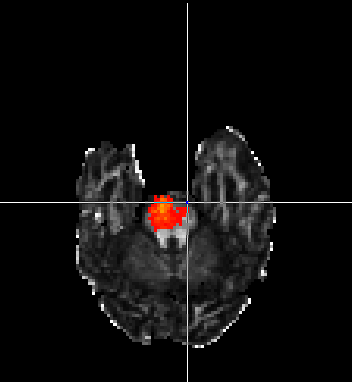
Hi Ping - It looks like the path initialization may have failed. The algorithm needs an initial guess for the path and iterates from there. This initial guess is chosen based on the tracts in the atlas and if your subject is not perfectly aligned with the atlas this initial guess might end up going off the white matter for example. Does the blue line in your snapshot look like it may not coincide well with you subject's CST, going off the white matter close to the end, etc?
a.y
On Thu, 22 Sep 2011, Ping-Hong Yeh wrote:
Hello,
The segmented left CST tracts of one of our 3T data was not satisfactory, which has only few voxels with 1000 gray values (see attached snapshot pictures for "trac-all" and "cst_prob"). The manually tracking using deterministic tractography seems OK (see cst_stremline). Any suggestions on which step may go wrong in trac-all?
Thank you,
Ping
Hi Anastasia,
The both ends were not terribly off of the white matter, though the lower end was a bit off at the level of decussation. any suggestion in fixing this?
Thanks.
ping
On Thu, Sep 22, 2011 at 12:51 PM, Anastasia Yendiki ayendiki@nmr.mgh.harvard.edu wrote:
Hi Ping - It looks like the path initialization may have failed. The algorithm needs an initial guess for the path and iterates from there. This initial guess is chosen based on the tracts in the atlas and if your subject is not perfectly aligned with the atlas this initial guess might end up going off the white matter for example. Does the blue line in your snapshot look like it may not coincide well with you subject's CST, going off the white matter close to the end, etc?
a.y
On Thu, 22 Sep 2011, Ping-Hong Yeh wrote:
Hello,
The segmented left CST tracts of one of our 3T data was not satisfactory, which has only few voxels with 1000 gray values (see attached snapshot pictures for "trac-all" and "cst_prob"). The manually tracking using deterministic tractography seems OK (see cst_stremline). Any suggestions on which step may go wrong in trac-all?
Thank you,
Ping
The information in this e-mail is intended only for the person to whom it is addressed. If you believe this e-mail was sent to you in error and the e-mail contains patient information, please contact the Partners Compliance HelpLine at http://www.partners.org/complianceline . If the e-mail was sent to you in error but does not contain patient information, please contact the sender and properly dispose of the e-mail.
Hi Ping - There are 2 possibilities:
1. You can try to fiddle with the initialization points yourself to make sure they're well in the CST. The point coordinates are saved in a text file - look at the --init argument of the dmri_paths command line, which you can find in trac-all.log.
2. You can let trac-all select a different initialization by adding "set reinit = 1" to your dmrirc file, then running trac-all -prior again.
Once you change the initialization by doing either 1. or 2. above, you need to run trac-all -path to reconstruct this path again.
You can change the pathlist in dmrirc to do only the path that failed.
We jump through various hoops to make sure this sort of thing doesn't happen but in a few cases it can't be prevented, unfortunately.
Let me know if this has helped or if you have any other questions! a.y
On Thu, 22 Sep 2011, Ping-Hong Yeh wrote:
Hi Anastasia,
The both ends were not terribly off of the white matter, though the lower end was a bit off at the level of decussation. any suggestion in fixing this?
Thanks.
ping
On Thu, Sep 22, 2011 at 12:51 PM, Anastasia Yendiki ayendiki@nmr.mgh.harvard.edu wrote:
Hi Ping - It looks like the path initialization may have failed. The algorithm needs an initial guess for the path and iterates from there. This initial guess is chosen based on the tracts in the atlas and if your subject is not perfectly aligned with the atlas this initial guess might end up going off the white matter for example. Does the blue line in your snapshot look like it may not coincide well with you subject's CST, going off the white matter close to the end, etc?
a.y
On Thu, 22 Sep 2011, Ping-Hong Yeh wrote:
Hello,
The segmented left CST tracts of one of our 3T data was not satisfactory, which has only few voxels with 1000 gray values (see attached snapshot pictures for "trac-all" and "cst_prob"). The manually tracking using deterministic tractography seems OK (see cst_stremline). Any suggestions on which step may go wrong in trac-all?
Thank you,
Ping
The information in this e-mail is intended only for the person to whom it is addressed. If you believe this e-mail was sent to you in error and the e-mail contains patient information, please contact the Partners Compliance HelpLine at http://www.partners.org/complianceline . If the e-mail was sent to you in error but does not contain patient information, please contact the sender and properly dispose of the e-mail.
Hi Anastasia,
I've tried both options, the choice 1 fixed some of the cases, but not all; and the choice 2 did not work at all. Maybe I've missed something here.
Few more questions:
1. Will the initial points have to include the points around start, way, and end points of the tracts need to be segmented? Can I just enter the points in the main stem of tracts?
2. Will EPI distortion correction, like using field map, in the preprocessing steps help co-registration and thus improving the labeling? So far more than 80% (4 out of 5 data sets) of the data have at least one suboptimal tract, either in flt or bbr. (BTW, which flag will call B0 fieldmaps (or phase and magnitude images) for distortion correction? Do the fieldmap images need to be in the same matrix size and resolution as DWI? )
3. I wonder why these suboptimal segmented tracts are not terribly off the white matter paths but just fewer voxels? Would the probabilistic tractography implemented in FSL be good in working around this problem by lowering the threshold for tract segmentation?
Thanks.
Ping
On Thu, Sep 22, 2011 at 1:18 PM, Anastasia Yendiki ayendiki@nmr.mgh.harvard.edu wrote:
Hi Ping - There are 2 possibilities:
- You can try to fiddle with the initialization points yourself to make
sure they're well in the CST. The point coordinates are saved in a text file
- look at the --init argument of the dmri_paths command line, which you can
find in trac-all.log.
- You can let trac-all select a different initialization by adding "set
reinit = 1" to your dmrirc file, then running trac-all -prior again.
Once you change the initialization by doing either 1. or 2. above, you need to run trac-all -path to reconstruct this path again.
You can change the pathlist in dmrirc to do only the path that failed.
We jump through various hoops to make sure this sort of thing doesn't happen but in a few cases it can't be prevented, unfortunately.
Let me know if this has helped or if you have any other questions! a.y
On Thu, 22 Sep 2011, Ping-Hong Yeh wrote:
Hi Anastasia,
The both ends were not terribly off of the white matter, though the lower end was a bit off at the level of decussation. any suggestion in fixing this?
Thanks.
ping
On Thu, Sep 22, 2011 at 12:51 PM, Anastasia Yendiki ayendiki@nmr.mgh.harvard.edu wrote:
Hi Ping - It looks like the path initialization may have failed. The algorithm needs an initial guess for the path and iterates from there. This initial guess is chosen based on the tracts in the atlas and if your subject is not perfectly aligned with the atlas this initial guess might end up going off the white matter for example. Does the blue line in your snapshot look like it may not coincide well with you subject's CST, going off the white matter close to the end, etc?
a.y
On Thu, 22 Sep 2011, Ping-Hong Yeh wrote:
Hello,
The segmented left CST tracts of one of our 3T data was not satisfactory, which has only few voxels with 1000 gray values (see attached snapshot pictures for "trac-all" and "cst_prob"). The manually tracking using deterministic tractography seems OK (see cst_stremline). Any suggestions on which step may go wrong in trac-all?
Thank you,
Ping
The information in this e-mail is intended only for the person to whom it is addressed. If you believe this e-mail was sent to you in error and the e-mail contains patient information, please contact the Partners Compliance HelpLine at http://www.partners.org/complianceline . If the e-mail was sent to you in error but does not contain patient information, please contact the sender and properly dispose of the e-mail.
Hi Ping - You can upload your data if you want me to take a look at it.
1. The initial points ideally should be along the midline of the pathway, starting from one end region of the pathway and going all the way to the other end region. (The default number is 5 control points but you can "set ncpts = ..." in your dmrirc to change that.)
2. You can look in $FREESURFER_HOME/bin/dmrirc.example for how to specify the field map inputs. They don't need to have the same matrix size and resolution as the DWIs.
3a. If it's the initialization that's failed, the output will just be the initial path and nothing else (which is I think what you mean by "fewer voxels").
3b. The diffusion model used here is the same as the ball-and-stick model that FSL uses. If the threshold you're referring to is the minimum volume fraction for the anisotropic compartments of that model, you can "set fmin = ..." in your dmrirc to choose one.
I hope this helps a bit! a.y
On Wed, 28 Sep 2011, Ping-Hong Yeh wrote:
Hi Anastasia,
I've tried both options, the choice 1 fixed some of the cases, but not all; and the choice 2 did not work at all. Maybe I've missed something here.
Few more questions:
- Will the initial points have to include the points around start,
way, and end points of the tracts need to be segmented? Can I just enter the points in the main stem of tracts?
- Will EPI distortion correction, like using field map, in the
preprocessing steps help co-registration and thus improving the labeling? So far more than 80% (4 out of 5 data sets) of the data have at least one suboptimal tract, either in flt or bbr. (BTW, which flag will call B0 fieldmaps (or phase and magnitude images) for distortion correction? Do the fieldmap images need to be in the same matrix size and resolution as DWI? )
- I wonder why these suboptimal segmented tracts are not terribly
off the white matter paths but just fewer voxels? Would the probabilistic tractography implemented in FSL be good in working around this problem by lowering the threshold for tract segmentation?
Thanks.
Ping
On Thu, Sep 22, 2011 at 1:18 PM, Anastasia Yendiki ayendiki@nmr.mgh.harvard.edu wrote:
Hi Ping - There are 2 possibilities:
- You can try to fiddle with the initialization points yourself to make
sure they're well in the CST. The point coordinates are saved in a text file
- look at the --init argument of the dmri_paths command line, which you can
find in trac-all.log.
- You can let trac-all select a different initialization by adding "set
reinit = 1" to your dmrirc file, then running trac-all -prior again.
Once you change the initialization by doing either 1. or 2. above, you need to run trac-all -path to reconstruct this path again.
You can change the pathlist in dmrirc to do only the path that failed.
We jump through various hoops to make sure this sort of thing doesn't happen but in a few cases it can't be prevented, unfortunately.
Let me know if this has helped or if you have any other questions! a.y
On Thu, 22 Sep 2011, Ping-Hong Yeh wrote:
Hi Anastasia,
The both ends were not terribly off of the white matter, though the lower end was a bit off at the level of decussation. any suggestion in fixing this?
Thanks.
ping
On Thu, Sep 22, 2011 at 12:51 PM, Anastasia Yendiki ayendiki@nmr.mgh.harvard.edu wrote:
Hi Ping - It looks like the path initialization may have failed. The algorithm needs an initial guess for the path and iterates from there. This initial guess is chosen based on the tracts in the atlas and if your subject is not perfectly aligned with the atlas this initial guess might end up going off the white matter for example. Does the blue line in your snapshot look like it may not coincide well with you subject's CST, going off the white matter close to the end, etc?
a.y
On Thu, 22 Sep 2011, Ping-Hong Yeh wrote:
Hello,
The segmented left CST tracts of one of our 3T data was not satisfactory, which has only few voxels with 1000 gray values (see attached snapshot pictures for "trac-all" and "cst_prob"). The manually tracking using deterministic tractography seems OK (see cst_stremline). Any suggestions on which step may go wrong in trac-all?
Thank you,
Ping
The information in this e-mail is intended only for the person to whom it is addressed. If you believe this e-mail was sent to you in error and the e-mail contains patient information, please contact the Partners Compliance HelpLine at http://www.partners.org/complianceline . If the e-mail was sent to you in error but does not contain patient information, please contact the sender and properly dispose of the e-mail.
freesurfer@nmr.mgh.harvard.edu
-
 Anastasia Yendiki
 -
 Ping-Hong Yeh
 -
 Priti Srinivasan