Sorry, I can't tell from the design matrix what it is you are trying to test. Looks like the 1st col is 0 or 1 and so probably models a group effect, but I don't see another col to model the other group.
Jerry Yeou-Wei Chen wrote:
Hi, I have a follow up question regarding mean-centering / demeaning regressors. I ran the same analysis with demeaned and non-demeaned regressors. (More specifically, the "demeaned" design consisted of: one regressor for gender, and 3 demeaned regressors for main effects, and 1 demeaned regressor for an interaction effect. the "non-demeaned" design consisted of the same regressors, except the main effects were not demeaned.)
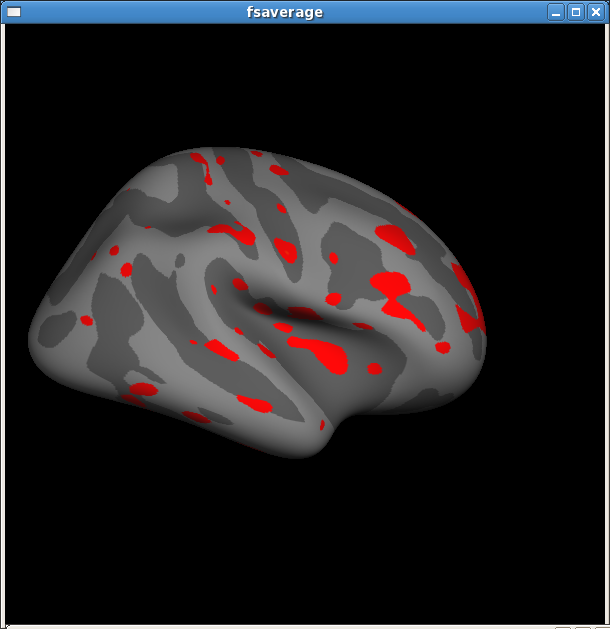
From what I understand, demeaning should not affect the parameter estimates. So, I was surprised when the results differed drastically between these two designs. The demeaned design resulted in essentially no significant blobs, whereas the non-demeaned design resulted in much much more blobs.
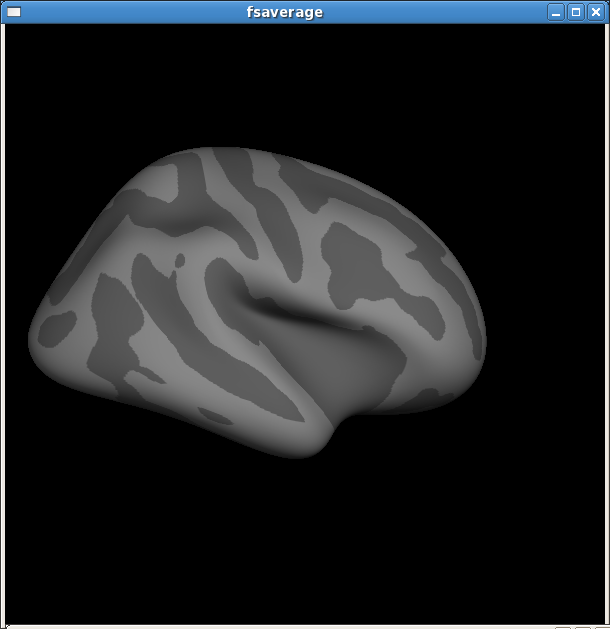
I have attached the design matrices and example images of the results.
- Jerry
On Thu, Apr 10, 2008 at 2:48 PM, Doug Greve <greve@nmr.mgh.harvard.edu mailto:greve@nmr.mgh.harvard.edu> wrote:
You can enter mean-centered (demeaned) values into the fsgd, but be aware that this is something that you usually do not want to do (though maybe ok for an interaction term?). Below is something I posted a few weeks ago on this subject. doug The important idea here is the difference between computing/testing the mean response and computing the intercept. The intercept is only meaningful when a continuous variable is present. When you do a statistical test, the results will be different for two possible reasons: 1. The statistical efficiencies are different (due to correlations caused by the non-zero mean of the continuous variable), which will reduce significance. This is always the case. 2. The values being tested (ie, the mean vs the intercept) are possibly different. I say "possibly" here because, scientifically speaking, there may be no effect of your continuous variable, in which case it would not add to the overall mean. In my opinion, the most appropriate way to analyze the data is to leave the means in your continuous variables (ie, do not demean). Here's why. When you believe that a variable is important scientifically, you posit a model with a population effect (parameterized by an intercept) and the continuous variable (parameterized by a slope). BOTH OF THESE PARAMETERS ARE INDEPENDENT OF THE SAMPLE YOU HAVE CHOSEN. Therefore, when you perform statistical tests on these parameters, your results are independent of your sample -- very important when doing science! In contrast, the mean of your sample may be dependent on the sample you have chosen, and so statistical tests may only then apply to your sample. For example, if age adds to the hemodynamic response (HRF), older subjects will have a larger amplitude to their HRF. Let's say you perform an experiment on a group of subjects and find that their mean HRF is significantly different than 0. Someone else tries to replicate your experiment and can't. Upon further examination, your sample was somewhat older than the other which caused your sample to have a higher mean and so achieve significance. When both sets are reanalyzed using age as a nuisance variable, the results are the same. This does not necessarily mean you should not demean your variables, but you just have to be careful what conclusions you draw from it. Note: this applies to variables and regressors -- don't demean your observed raw data (unless you know what you are doing). Jerry Yeou-Wei Chen wrote:Hello, Are regressors mean centered for mri_glmfit? Judging by one of my previous Xg.dat files, it does not appear so. If not, I plan to manually enter my design matrix, with mean centered regressors. Do I need to enter the corresponding values in the FSGD file as mean centered? or can they remain non- mean centered? Thanks, - Jerry
Freesurfer mailing list Freesurfer@nmr.mgh.harvard.edu mailto:Freesurfer@nmr.mgh.harvard.edu https://mail.nmr.mgh.harvard.edu/mailman/listinfo/freesurfer
-- Douglas N. Greve, Ph.D. MGH-NMR Center greve@nmr.mgh.harvard.edu mailto:greve@nmr.mgh.harvard.edu Phone Number: 617-724-2358 Fax: 617-726-7422
In order to help us help you, please follow the steps in: surfer.nmr.mgh.harvard.edu/fswiki/BugReporting http://surfer.nmr.mgh.harvard.edu/fswiki/BugReporting