
External Email - Use Caution
Dear Freesurfer Developers and Experts,
I have been exploring various vertex wise (mass univariate) effects using freesurfer measures of cortical thickness and surface area in a cohort of toddlers/children aged 25-70 months.
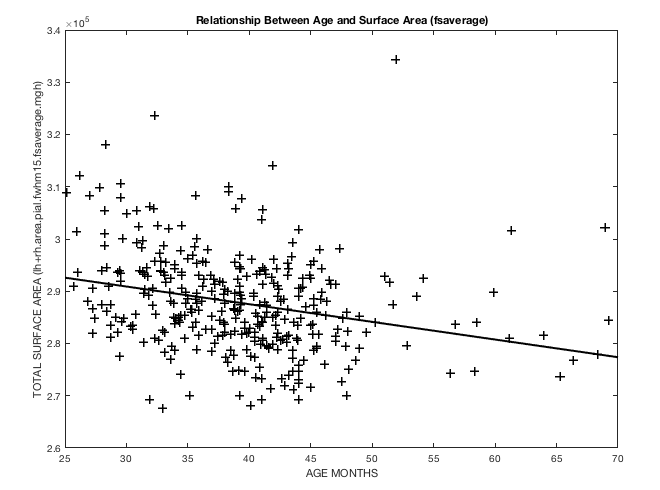
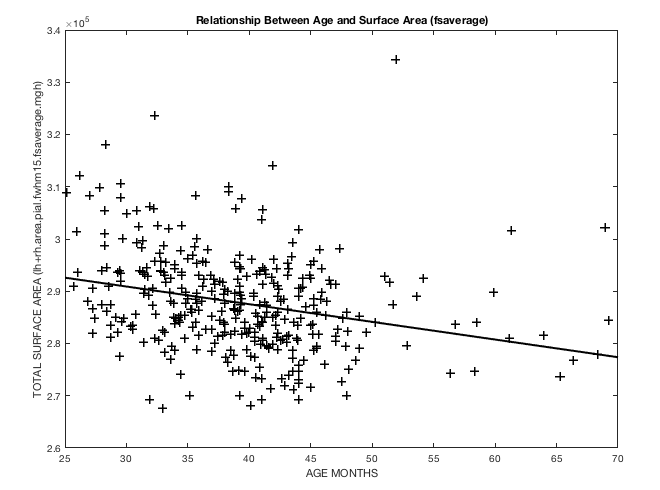
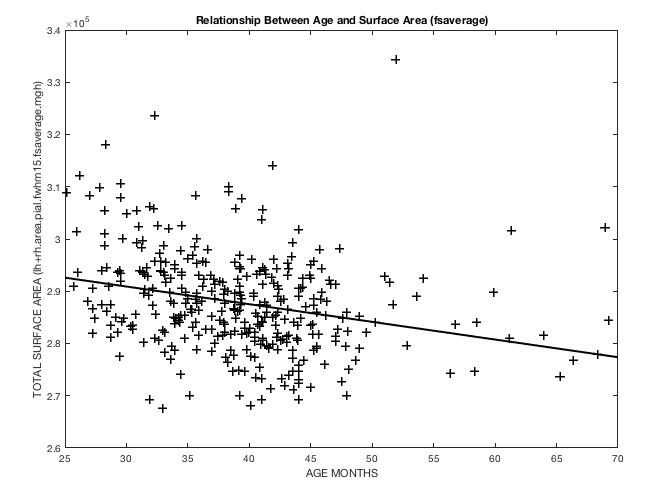
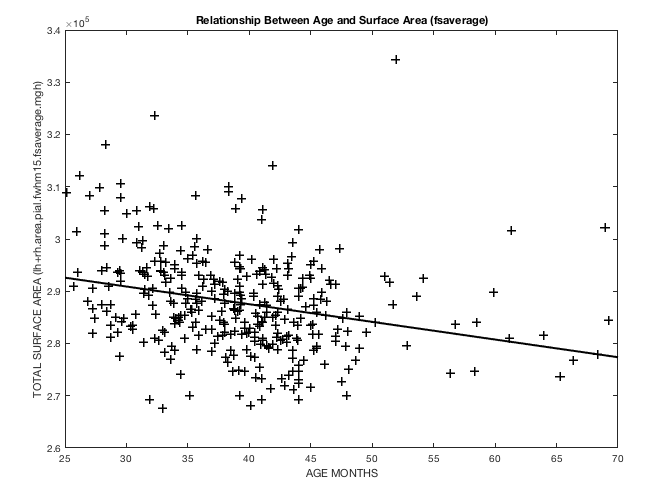
When looking at the effect of age on surface area using individuals’ measures mapped to fsaverage and smoothed at 15mm fwhm (area.pial. fwhm15.fsaverage.mgh) I observed a widespread negative effect of age (i.e. decreased surface area with age). Given the age group of the cohort this seems implausible. Plotting the sum of each individuals lh+rh.area.pialfsaverage.fwhm15.mgh against age shows the relationship: [cid:image001.png@01D42FCE.C197B360]
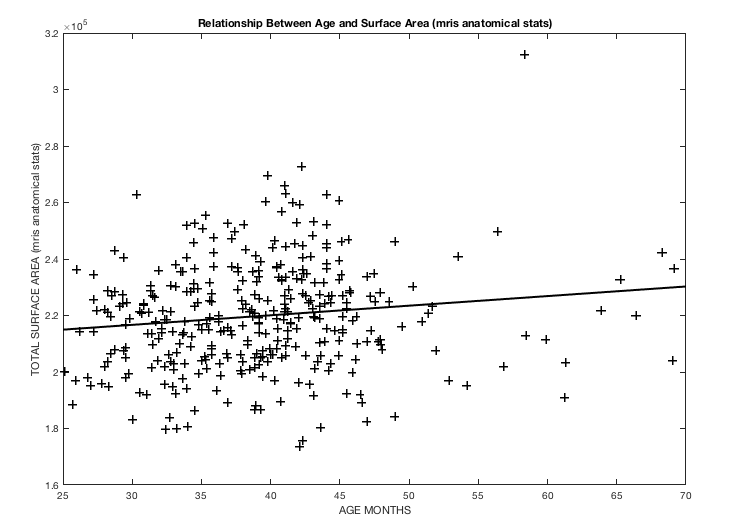
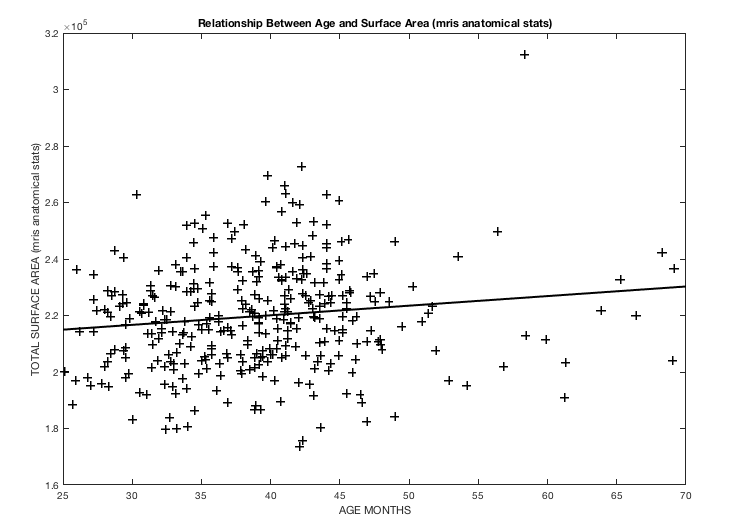
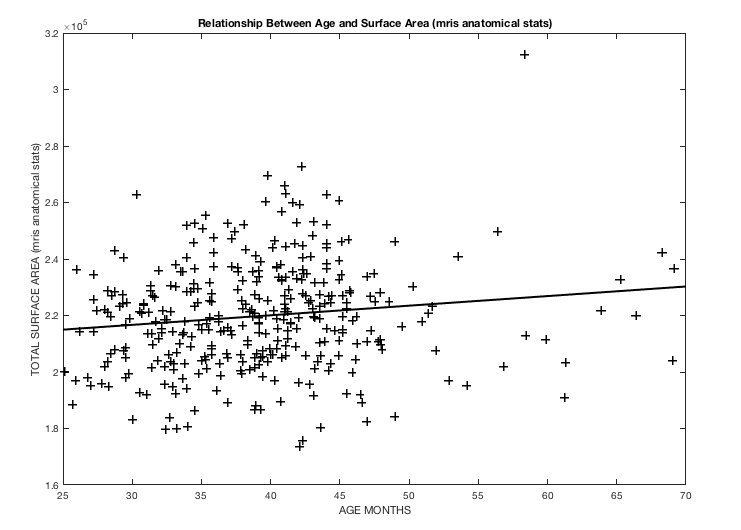
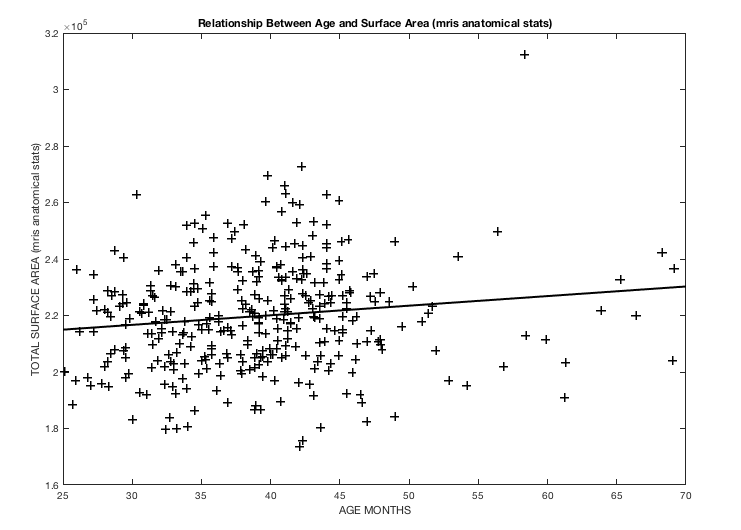
However, plotting the lh+rh total surface area returned by mris_anatomical_stats reveals a much more plausible relationship between surface area and age: [cid:image002.png@01D42FCE.C197B360]
My working hypothesis is that the significantly smaller brain sizes of our cohort compared to fsaverage, and the fact(?) that -qcache does not preserve global surface area, is causing an “over adjustment” in our cohorts smallest brains when mapped to fsaverage.
Thus, my questions are three fold
1. Is the mapping of our significantly smaller brains to fsaverage a potential explanation for the results we are seeing in our mass univariate analyses of surface area?
1. If this is the case, would this effect be limited to surface area or also extend to other freesurfer measures including cortical thickness, lGI, sulcal depth etc.
1. How would you recommend approaching vertex wise analyses in a cohort of this age? Create a study specific average subject using make_average_subject to map onto?
Thank you for your insight and guidance!
Best, Derek
PS: All processing was performed using freesurfer v5.1
Derek Sayre Andrews, PhD Postdoctoral Scholar Department of Psychiatry and Behavioral Sciences The M.I.N.D Institute University of California Davis
Telephone: +1 916 703 0360 Email: dandrews@UCDavis.edumailto:dandrews@UCDavis.edu


External Email - Use Caution
Hi Derek,
you could try creating a study-specific template to replace fsaverage with make_average_subject and then re-run your reconall.
Best,
Laurel
Laurel Raffington
Postdoctoral Researcher
Center for Lifespan Psychology
Max Planck Institute for Human Development
Lentzeallee 94, 14195 Berlin, Germany
https://www.mpib-berlin.mpg.de/en/staff/laurel-raffington
________________________________ From: freesurfer-bounces@nmr.mgh.harvard.edu freesurfer-bounces@nmr.mgh.harvard.edu on behalf of Derek Sayre Andrews dandrews@ucdavis.edu Sent: Thursday, August 9, 2018 9:49:09 PM To: Freesurfer support list Subject: [Freesurfer] Surface Area in Toddlers/Children
External Email - Use Caution Dear Freesurfer Developers and Experts,
I have been exploring various vertex wise (mass univariate) effects using freesurfer measures of cortical thickness and surface area in a cohort of toddlers/children aged 25-70 months.
When looking at the effect of age on surface area using individuals’ measures mapped to fsaverage and smoothed at 15mm fwhm (area.pial. fwhm15.fsaverage.mgh) I observed a widespread negative effect of age (i.e. decreased surface area with age). Given the age group of the cohort this seems implausible. Plotting the sum of each individuals lh+rh.area.pialfsaverage.fwhm15.mgh against age shows the relationship: [cid:image001.png@01D42FCE.C197B360]
However, plotting the lh+rh total surface area returned by mris_anatomical_stats reveals a much more plausible relationship between surface area and age: [cid:image002.png@01D42FCE.C197B360]
My working hypothesis is that the significantly smaller brain sizes of our cohort compared to fsaverage, and the fact(?) that -qcache does not preserve global surface area, is causing an “over adjustment” in our cohorts smallest brains when mapped to fsaverage.
Thus, my questions are three fold
1. Is the mapping of our significantly smaller brains to fsaverage a potential explanation for the results we are seeing in our mass univariate analyses of surface area?
1. If this is the case, would this effect be limited to surface area or also extend to other freesurfer measures including cortical thickness, lGI, sulcal depth etc.
1. How would you recommend approaching vertex wise analyses in a cohort of this age? Create a study specific average subject using make_average_subject to map onto?
Thank you for your insight and guidance!
Best, Derek
PS: All processing was performed using freesurfer v5.1
Derek Sayre Andrews, PhD Postdoctoral Scholar Department of Psychiatry and Behavioral Sciences The M.I.N.D Institute University of California Davis
Telephone: +1 916 703 0360 Email: dandrews@UCDavis.edumailto:dandrews@UCDavis.edu



It should be preserving total surface area. Can you send your mris_preproc command line and the terminal output? It might be something with 5.1 as well.
On 8/9/18 3:49 PM, Derek Sayre Andrews wrote:
External Email - Use Caution
Dear Freesurfer Developers and Experts,
I have been exploring various vertex wise (mass univariate) effects using freesurfer measures of cortical thickness and surface area in a cohort of toddlers/children aged 25-70 months.
When looking at the effect of age on surface area using individuals’ measures mapped to fsaverage and smoothed at 15mm fwhm (area.pial. fwhm15.fsaverage.mgh) I observed a widespread negative effect of age (i.e. decreased surface area with age). Given the age group of the cohort this seems implausible. Plotting the sum of each individuals lh+rh.area.pialfsaverage.fwhm15.mgh against age shows the relationship:
cid:image001.png@01D42FCE.C197B360
However, plotting the lh+rh total surface area returned by mris_anatomical_stats reveals a much more plausible relationship between surface area and age:
cid:image002.png@01D42FCE.C197B360
My working hypothesis is that the significantly smaller brain sizes of our cohort compared to fsaverage, and the fact(?) that -qcache does not preserve global surface area, is causing an “over adjustment” in our cohorts smallest brains when mapped to fsaverage.
Thus, my questions are three fold
Is the mapping of our significantly smaller brains to fsaverage a potential explanation for the results we are seeing in our mass univariate analyses of surface area?
If this is the case, would this effect be limited to surface area or also extend to other freesurfer measures including cortical thickness, lGI, sulcal depth etc.
How would you recommend approaching vertex wise analyses in a cohort of this age? Create a study specific average subject using make_average_subject to map onto?
Thank you for your insight and guidance!
Best, Derek
PS: All processing was performed using freesurfer v5.1
cid:image003.png@01D42FCE.C197B360
*Derek Sayre Andrews, PhD*
Postdoctoral Scholar
Department of Psychiatry and Behavioral Sciences
The M.I.N.D Institute
University of California Davis
Telephone: +1 916 703 0360 Email: dandrews@UCDavis.edu mailto:dandrews@UCDavis.edu
Freesurfer mailing list Freesurfer@nmr.mgh.harvard.edu https://mail.nmr.mgh.harvard.edu/mailman/listinfo/freesurfer


External Email - Use Caution
Hi Douglas,
Thank you for the response.
I did not use mris_preproc to prepared the data.
The data was mapped to fsaverage using recon-all with -qcache. I then loaded the l/rh.area.pial.fwhm15.fsaverage.mgh files into MATLAB using SurfStatReadDatahttp://www.math.mcgill.ca/keith/surfstat/ and summed them across each vertex.
Would the terminal output of recon-all -qcache be helpful?
Best, Derek
Derek Sayre Andrews, PhD Postdoctoral Scholar Department of Psychiatry and Behavioral Sciences The M.I.N.D Institute University of California Davis
Telephone: +1 916 703 0360 Email: dandrews@UCDavis.edumailto:dandrews@UCDavis.edu
From: freesurfer-bounces@nmr.mgh.harvard.edu on behalf of Douglas Greve dgreve@mgh.harvard.edu Reply-To: Freesurfer support list freesurfer@nmr.mgh.harvard.edu Date: Friday, August 10, 2018 at 10:25 AM To: "freesurfer@nmr.mgh.harvard.edu" freesurfer@nmr.mgh.harvard.edu Subject: Re: [Freesurfer] Surface Area in Toddlers/Children
It should be preserving total surface area. Can you send your mris_preproc command line and the terminal output? It might be something with 5.1 as well.
On 8/9/18 3:49 PM, Derek Sayre Andrews wrote:
External Email - Use Caution Dear Freesurfer Developers and Experts,
I have been exploring various vertex wise (mass univariate) effects using freesurfer measures of cortical thickness and surface area in a cohort of toddlers/children aged 25-70 months.
When looking at the effect of age on surface area using individuals’ measures mapped to fsaverage and smoothed at 15mm fwhm (area.pial. fwhm15.fsaverage.mgh) I observed a widespread negative effect of age (i.e. decreased surface area with age). Given the age group of the cohort this seems implausible. Plotting the sum of each individuals lh+rh.area.pialfsaverage.fwhm15.mgh against age shows the relationship: [cid:image001.png@01D42FCE.C197B360]
However, plotting the lh+rh total surface area returned by mris_anatomical_stats reveals a much more plausible relationship between surface area and age: [cid:image002.png@01D42FCE.C197B360]
My working hypothesis is that the significantly smaller brain sizes of our cohort compared to fsaverage, and the fact(?) that -qcache does not preserve global surface area, is causing an “over adjustment” in our cohorts smallest brains when mapped to fsaverage.
Thus, my questions are three fold
1. Is the mapping of our significantly smaller brains to fsaverage a potential explanation for the results we are seeing in our mass univariate analyses of surface area?
1. If this is the case, would this effect be limited to surface area or also extend to other freesurfer measures including cortical thickness, lGI, sulcal depth etc.
1. How would you recommend approaching vertex wise analyses in a cohort of this age? Create a study specific average subject using make_average_subject to map onto?
Thank you for your insight and guidance!
Best, Derek
PS: All processing was performed using freesurfer v5.1
Derek Sayre Andrews, PhD Postdoctoral Scholar Department of Psychiatry and Behavioral Sciences The M.I.N.D Institute University of California Davis
Telephone: +1 916 703 0360 Email: dandrews@UCDavis.edumailto:dandrews@UCDavis.edu
_______________________________________________
Freesurfer mailing list
Freesurfer@nmr.mgh.harvard.edumailto:Freesurfer@nmr.mgh.harvard.edu
https://mail.nmr.mgh.harvard.edu/mailman/listinfo/freesurfer


Yes. -qcache actually calls mris_preproc. At one point, FS did not preserve total area when mapping to fsaverage. I fixed it a while ago, but maybe something was still off in 5.1
On 8/10/18 2:06 PM, Derek Sayre Andrews wrote:
External Email - Use Caution
Hi Douglas,
Thank you for the response.
I did not use mris_preproc to prepared the data.
The data was mapped to fsaverage using recon-all with -qcache. I then loaded the l/rh.area.pial.fwhm15.fsaverage.mgh files into MATLAB using SurfStatReadData http://www.math.mcgill.ca/keith/surfstat/ and summed them across each vertex.
Would the terminal output of recon-all -qcache be helpful?
Best, Derek
*Derek Sayre Andrews, PhD*
Postdoctoral Scholar
Department of Psychiatry and Behavioral Sciences
The M.I.N.D Institute
University of California Davis
Telephone: +1 916 703 0360 Email: dandrews@UCDavis.edu mailto:dandrews@UCDavis.edu
*From: *freesurfer-bounces@nmr.mgh.harvard.edu on behalf of Douglas Greve dgreve@mgh.harvard.edu *Reply-To: *Freesurfer support list freesurfer@nmr.mgh.harvard.edu *Date: *Friday, August 10, 2018 at 10:25 AM *To: *"freesurfer@nmr.mgh.harvard.edu" freesurfer@nmr.mgh.harvard.edu *Subject: *Re: [Freesurfer] Surface Area in Toddlers/Children
It should be preserving total surface area. Can you send your mris_preproc command line and the terminal output? It might be something with 5.1 as well.
On 8/9/18 3:49 PM, Derek Sayre Andrews wrote:
*        External Email - Use Caution *

Dear Freesurfer Developers and Experts,

I have been exploring various vertex wise (mass univariate)
effects using freesurfer measures of cortical thickness and
surface area in a cohort of toddlers/children aged 25-70 months.

When looking at the effect of age on surface area using
individuals’ measures mapped to fsaverage and smoothed at 15mm
fwhm (area.pial. fwhm15.fsaverage.mgh) I observed a widespread
negative effect of age (i.e. decreased surface area with age).
Given the age group of the cohort this seems implausible. Plotting
the sum of each individuals lh+rh.area.pialfsaverage.fwhm15.mgh
against age shows the relationship:

cid:image001.png@01D42FCE.C197B360

However, plotting the lh+rh total surface area returned by
mris_anatomical_stats reveals a much more plausible relationship
between surface area and age:

cid:image002.png@01D42FCE.C197B360

My working hypothesis is that the significantly smaller brain
sizes of our cohort compared to fsaverage, and the fact(?) that
-qcache does not preserve global surface area, is causing an “over
adjustment” in our cohorts smallest brains when mapped to fsaverage.

Thus, my questions are three fold

 1. Is the mapping of our significantly smaller brains to
    fsaverage a potential explanation for the results we are
    seeing in our mass univariate analyses of surface area?

 2. If this is the case, would this effect be limited to surface
    area or also extend to other freesurfer measures including
    cortical thickness, lGI, sulcal depth etc.

 3. How would you recommend approaching vertex wise analyses in a
    cohort of this age? Create a study specific average subject
    using make_average_subject to map onto?

Thank you for your insight and guidance!

Best, Derek

PS: All processing was performed using freesurfer v5.1

cid:image003.png@01D42FCE.C197B360

*Derek Sayre Andrews, PhD*

Postdoctoral Scholar

Department of Psychiatry and Behavioral Sciences

The M.I.N.D Institute

University of California Davis


Telephone: +1 916 703 0360
Email: dandrews@UCDavis.edu <mailto:dandrews@UCDavis.edu>


_______________________________________________

Freesurfer mailing list

Freesurfer@nmr.mgh.harvard.edu <mailto:Freesurfer@nmr.mgh.harvard.edu>

https://mail.nmr.mgh.harvard.edu/mailman/listinfo/freesurfer
Freesurfer mailing list Freesurfer@nmr.mgh.harvard.edu https://mail.nmr.mgh.harvard.edu/mailman/listinfo/freesurfer



Hi Derek, We do not use the standard FS pipeline for the analysis of the age group of your interest. In general, we have seen it being successfully used on subjects down to 4.5yrs of age, but 25 mo is quite young to be analyzed by the adult template. I assume, without seeing your data, that your assumption is correct about the registration to the adult fsaverage significantly influencing your results. Wrt (3), yes, I believe a new pipeline with new templates would need to be created to be more suited to your dataset. Best, Lilla
On Thu, 9 Aug 2018, Derek Sayre Andrews wrote:
Dear Freesurfer Developers and Experts,
I have been exploring various vertex wise (mass univariate) effects using freesurfer measures of cortical thickness and surface area in a cohort of toddlers/children aged 25-70 months.
When looking at the effect of age on surface area using individuals’ measures mapped to fsaverage and smoothed at 15mm fwhm (area.pial. fwhm15.fsaverage.mgh) I observed a widespread negative effect of age (i.e. decreased surface area with age). Given the age group of the cohort this seems implausible. Plotting the sum of each individuals lh+rh.area.pialfsaverage.fwhm15.mgh against age shows the relationship:
cid:image001.png@01D42FCE.C197B360
However, plotting the lh+rh total surface area returned by mris_anatomical_stats reveals a much more plausible relationship between surface area and age:
cid:image002.png@01D42FCE.C197B360
My working hypothesis is that the significantly smaller brain sizes of our cohort compared to fsaverage, and the fact(?) that -qcache does not preserve global surface area, is causing an “over adjustment” in our cohorts smallest brains when mapped to fsaverage.
Thus, my questions are three fold
- Is the mapping of our significantly smaller brains to fsaverage a potential explanation for the results we are seeing in our mass univariate analyses of surface area?
- If this is the case, would this effect be limited to surface area or also extend to other freesurfer measures including cortical thickness, lGI, sulcal depth etc.
- How would you recommend approaching vertex wise analyses in a cohort of this age? Create a study specific average subject using make_average_subject to map onto?
Thank you for your insight and guidance!
Best, Derek
PS: All processing was performed using freesurfer v5.1
cid:image003.png@01D42FCE.C197B360
Derek Sayre Andrews, PhD
Postdoctoral Scholar
Department of Psychiatry and Behavioral Sciences
The M.I.N.D Institute
University of California Davis
Telephone: +1 916 703 0360 Email: dandrews@UCDavis.edu
freesurfer@nmr.mgh.harvard.edu
-
 Derek Sayre Andrews
 -
 Douglas Greve
 -
 Lilla Zollei
 -
 Raffington, Laurel