
Hi all, I'm still trying to sort out some problems I've been having with selxavg3-sess in Freesurfer 4.5 on RedHat Linux, CentOs 5.5.
I've tried a bunch of things, but I will provide the simplified process here as a starting point. I have a blocked design where I have 3 conditions, fixation, noise, and shape. Things look good when I compare shape vs noise, but very very bad in an unrealistic way when I compare anything to fixation (shape vs fixation, noise vs fixation, active vs fixation). Attached are the pictures I get. The subjects are not moving much (checked the motion correction output). I tried running the analysis with the -no-whiten flag and it made no difference. When this data is analyzed with Brain Voyager by others in my lab, this problem doesn't exist, and you see appropriate activity for the vs. fixation conditions. When I run data collected with PACE, I don't have this comparison to fixation problem, but I do for nonPACE bold runs.
Commands I ran: mkanalysis-sess -analysis infIPS -TR 2 -paradigm loc.dat -designtype blocked -funcstem fmc -motioncor -runlistfile loc_runs.txt -inorm -nskip 2 -nconditions 2 -timewindow 20 -gammafit 2.25 1.25 -noautostimdur
mkcontrast-sess -analysis infIPS -contrast shape_vs_fix -a 2 -c 0 mkcontrast-sess -analysis infIPS -contrast noise_vs_fix -a 1 -c 0 mkcontrast-sess -analysis infIPS -contrast shape_vs_noise -a 2 -c 1 mkcontrast-sess -analysis infIPS -contrast act_vs_fix -a 2 -a 1 -c 0
selxavg3-sess -sf loc_loc-sess -df loc_loc.dir -analysis infIPS
Any thoughts?
Katie
On Fri, Nov 12, 2010 at 4:19 PM, Katie Bettencourt kcrum@bu.edu wrote:
This is in blocked designs and in event related gamma designs (I haven't had time to finish sorting out my FIR problems, so that's a different email), but they've all boiled down to essentially these sets of commands:
mkanalysis-sess.new -analysis num_loc -TR 2 -paradigm num.dat -designtype blocked -funcstem fmc -runlistfile num_runs.txt -inorm -nconditions 4 -timewindow 20 -gammafit 2.25 1.25
mkcontrast-sess -analysis num_loc -contrast act_vs_fix -a 1 -a 2 -a 3 -a 4 -c 0 mkcontrast-sess -analysis num_loc -contrast lnum_vs_snum -a 1 -c 2 ...etc...
preproc-sess -nosmooth -sf num-sess -df num.dir
selxavg3-sess -sf num-sess -df num.dir -analysis num_loc -skip -or- selxavg-sess -sf num-sess -df num.dir -analysis num_loc
stxgrinder-sess -analysis num_loc -contrast [contrastname here] -sf num-sess -df num.dir
I have tried running the same (w/ selxavg3-sess) as above but with using:
- the -nskip 2 flag in mkanalysis-sess.new to skip the first 2 TRs (no
change) 2. using mkanalysis-sess (no .new) with the -no-whiten flag 3. getting rid of the -timewindow flag 4. running stxgrinder-sess and paint-sess after selxavg3-sess to get the sig-0-lh and sig-0-rh files
None of these things have had any effect. I've checked the motion parameters and they haven't moved much. The raw data seems fine because it analyzes fine in BrainVoyager (which I don't want to use for a multitude of reasons, but others in my lab do use). I still end up with the entire brain activating and activating strongly for the baseline conditions, but only if the data were acquired using nonPACE BOLD runs and only if I use selxavg3-sess. My PACE data is fine in both.
Katie
On Fri, Nov 12, 2010 at 3:29 PM, Douglas N Greve < greve@nmr.mgh.harvard.edu> wrote:
And this is not usging FIR, right? Can you send me your mkanalysis-sess commands for selxavg-sess and selxavg3-sess?
Katie Bettencourt wrote:
That's ok, we;ve gone back and forth a bit.
The real problem is that when I use selxavg3-sess on data collected in non PACE sequences, it looks fine in contrasts that aren't against baseline (the 0 condition in the paradigm files) but when I look at conditions vs baseline (like act-vs-fix) the entire brain shows strong activation for the baseline condition (I had attached pictures originally, but basically imaging a brain that looks pretty much all blue and you get an accurate picture). When I used selxavg-sess instead, I see a little less activation for the comparisons that aren't against baseline, but appropriate pictures when I compare against baseline.
As I've said, this data has been analyzed in Brain voyager and looks fine (actually stronger) but doesn't work in Freesurfer right. The activity I see with selxavg3-sess when I compare nonbaseline conditions (ie. shape-vs-noise) appears to be in similar locations in both Freesurfer and BrainVoyager (though again weaker in Freesurfer for same thresholds). It's really just the comparison to baseline that seems to be screwed up.
Katie
On Fri, Nov 12, 2010 at 3:11 PM, Douglas N Greve < greve@nmr.mgh.harvard.edu mailto:greve@nmr.mgh.harvard.edu> wrote:
sorry, I've lost track of what the problem is exactly. If I remember: you analyze using selxavg-sess and brain voyager and things look ok, but in selxavg3-sess you lose activation?
doug
Katie Bettencourt wrote:
   I tried it with the -no-whiten flag and again there is no
   difference between the -no-whiten and the normal version.  Any
   other thoughts?  The only thing that seems to come up is that
   when the data is collected with a PACE sequence I don't get
   this problem, but a standard BOLD sequence does.  I would
   assume it was motion or something, but the motion parameters
   are small and the data works fine in brain voyager.

   The only thing I think that is done different in brain voyager
   is that they skip the first 2 TRs (and each experiment starts
   with fixation), I tried to do that with the -nskip 2 option,
   do I need to also use the -tpef function or is that only if
   your paradigm file doesn't start at 0?

   Katie

   On Fri, Nov 12, 2010 at 1:02 PM, Katie Bettencourt
   <kcrum@bu.edu <mailto:kcrum@bu.edu> <mailto:kcrum@bu.edu

   <mailto:kcrum@bu.edu>>> wrote:

      No, it was with .new  should I be using mkanalysis-sess usually
      instead of mkanalysis-sess.new?  What exactly is the
   difference?


      Katie


      On Fri, Nov 12, 2010 at 1:00 PM, Douglas N Greve
      <greve@nmr.mgh.harvard.edu
   <mailto:greve@nmr.mgh.harvard.edu>
   <mailto:greve@nmr.mgh.harvard.edu
   <mailto:greve@nmr.mgh.harvard.edu>>> wrote:

          Is it in mkanalysis-sess (without the ".new")?

          Katie Bettencourt wrote:

              I tried using the no-whiten flag with
   mkanalysis.new and
              it said there was no such flag and I can't find any
              reference to it on the wiki.

              Katie

              On Wed, Nov 10, 2010 at 5:31 PM, Douglas N Greve
              <greve@nmr.mgh.harvard.edu
   <mailto:greve@nmr.mgh.harvard.edu>
              <mailto:greve@nmr.mgh.harvard.edu
   <mailto:greve@nmr.mgh.harvard.edu>>
              <mailto:greve@nmr.mgh.harvard.edu
   <mailto:greve@nmr.mgh.harvard.edu>
              <mailto:greve@nmr.mgh.harvard.edu
   <mailto:greve@nmr.mgh.harvard.edu>>>> wrote:


                 Can you create a new analysis using the
   -no-whiten flag
              and re-run
                 selxavg3-sess? For the other error, you need to
   select
              a prestim
                 and timewindow that are integer multiples of 1.5.

                 doug

                 Katie Bettencourt wrote:

                     So this data has been previously analyzed in
              BrainVoyager, and
                     there is no problems with it, subject
   movement is
              very low (<
                     2mm across all runs and timepoints), though
   I did
              notice that
                     this problem does not happen when I analyze data
              collected
                     with PACE sequences, and not with ones that
   do not
              use PACE.
                      I tried running the selxavg3-sess with the
              -svres-unwhitened
                     (which is the only whitening related command I
              could see), but
                     it made no difference.  I'm not sure how to
   look at
              the raw
                     data precisely, but I do know it works
   correctly in BV.

                     Any other thoughts on what's going wrong
   here?  Can
              I at least
                     trust the data that isn't against baseline
   in this
              case?  It
                     looks similar, though weaker to the same data
              analyzed with
                     BrainVoyager (not sure why I keep getting weaker
              activation in
                     Freesurfer than Brainvoyager, but that's a
   different
                     consideration).


                     Somewhat relatedly, when I try to run a FIR
              analysis with
                     selxavg3-sess (instead of selxavg-sess):
                     mkanalysis-sess.new -analysis supIPS_loc-fir -TR
              1.5 -paradigm
                     supIPS.dat -designtype event-related
   -funcstem fmc
              -motioncor
                     -runlistfile supIPSruns.txt -inorm -nskip 2
              -nconditions 6
                     -tprestim 2 -timewindow 20

                     selxavg3-sess -s 101103TM -df supIPS.dir
   -analysis
              supIPS_loc-fir

                     I get this output/error:

                     selxavg3-sess logfile is
/home/kcb/mri-space/supIPS_loc/log/selxavg3-sess-bold-supIPS_loc-fir-101110150643.log
                     -------------------------------------------
                     /home/kcb/mri-space/101103TM_supIPS
                     Wed Nov 10 15:06:43 EST 2010
                     anadir =
              /home/kcb/mri-space/101103TM_supIPS/bold/supIPS_loc-fir
                     ------------------------------------------
                     ------- matlab output --------------------
                     Warning: Unable to open display 'iconic'.
    You will
              not be
                     able to display graphics on the screen.

                                                < M A T L A B (R) >
                                      Copyright 1984-2010 The
   MathWorks,
              Inc.
                                    Version 7.10.0.499 (R2010a)
   64-bit
              (glnxa64)
                                                  February 5, 2010

                       To get started, type one of these: helpwin,
              helpdesk, or demo.
                      For product information, visit
   www.mathworks.com <http://www.mathworks.com>
              <http://www.mathworks.com>
                     <http://www.mathworks.com>
   <http://www.mathworks.com>.


                      >> >> >> >> >> >> >>
/usr/local/freesurfer4.5/fsfast/toolbox/fast_selxavg3.m >> >> >> >> >> >> >> >> >> >> >> >> >> >> >> >> >> >> >> >> $Id: fast_selxavg3.m,v 1.55.2.8 2009/04/17 20:09:46 greve Exp $ outtop = /home/kcb/mri-space Extension format = nii UseFloat = 0 INFO: acfbins is not set, setting to 10 INFO: mask is not set, setting to brain 1 1_vs_fix.mat 2 2_vs_1.mat 3 2_vs_fix.mat 4 3_vs_1.mat 5 3_vs_2.mat 6 3_vs_fix.mat 7 4_vs_1.mat 8 4_vs_2.mat 9 4_vs_3.mat 10 4_vs_fix.mat 11 643_vs_2-delay.mat 12 643_vs_2.mat 13 6_vs_1.mat 14 6_vs_2.mat 15 6_vs_3.mat 16 6_vs_4.mat 17 6_vs_fix.mat 18 act_vs_fix.mat 19 allvres.mat 20 omnibus.mat 21 zallvres.mat 22 zomnibus.mat ERROR: psdmin=-2 not int mult of dpsd=1.5 ERROR: psdmax=17.5 not int mult of dpsd=1.5 ??? Index exceeds matrix dimensions.
                     Error in ==> fast_condctrstmtx at 102
                      Rpost  = diag(WDelays(nnpost)); % Diagonal
              PostStim Weights

                     Error in ==> flac_conmat at 64
                      R =
fast_condctrstmtx(dpsd,TW,-psdmin,con.sumevreg,WDelay,1);
Error in ==> fast_ldanaflac at 474 flactmp = flac_conmat(flac,nthcon); Error in ==> fast_selxavg3 at 85 flac0 = fast_ldanaflac(analysis); >> ------------------------------------------ ERROR: fast_selxavg3() failed\n Katie On Wed, Nov 10, 2010 at 11:03 AM, Douglas N Greve <greve@nmr.mgh.harvard.edu <mailto:greve@nmr.mgh.harvard.edu> <mailto:greve@nmr.mgh.harvard.edu <mailto:greve@nmr.mgh.harvard.edu>> <mailto:greve@nmr.mgh.harvard.edu <mailto:greve@nmr.mgh.harvard.edu> <mailto:greve@nmr.mgh.harvard.edu <mailto:greve@nmr.mgh.harvard.edu>>> <mailto:greve@nmr.mgh.harvard.edu <mailto:greve@nmr.mgh.harvard.edu> <mailto:greve@nmr.mgh.harvard.edu <mailto:greve@nmr.mgh.harvard.edu>> <mailto:greve@nmr.mgh.harvard.edu <mailto:greve@nmr.mgh.harvard.edu> <mailto:greve@nmr.mgh.harvard.edu <mailto:greve@nmr.mgh.harvard.edu>>>>> wrote: I have no idea what is happening, but I can suggest a few checks. Have you looked at the motion correction plots? Have you looked at the raw data? Another thing to try is to turn off whitening when you make the analysis for selxavg3-sess. doug Katie Bettencourt wrote: > Hi all, > > I'm still trying to figure out what's going on with the differences > I'm getting between selxavg-sess and selxavg3-sess. I"m using > freesurfer4.5. I was using selxavg3-sess (as suggested on the wiki) > but I was getting weird activation maps when I compared any condition > vs. baseline, where most of the brain was more activity for baseline > (which was fixation) - see the attached picture for > act-fix-gamma-selxavg3-rh.png. So I ran selxavg-sess which was what > I used to run with an older version of freesurfer, and when I did this > I got a more appropriate picture - see act-fix-gamma-rh.png > > The experiment starts with fixation (baseline) so I tried running the > analysis with and without skipping the first 2 TRs to account for the > BOLD spike, but it makes no difference in the activation map. > > These are essentially the commands I ran: > mkanalysis-sess.new -analysis loc_loc -TR 2 -paradigm loc.dat > -designtype blocked -funcstem fmc -runlistfile loc_runs.txt -inorm > -nconditions 2 -timewindow 20 -gammafit 2.25 1.25 > > mkcontrast-sess -analysis loc_loc -contrast shape_vs_fix -a 2 -c 0 > > selxavg3-sess -s 101006SP_loc_loc -df loc_loc.dir -analysis loc_loc > > > Thoughts? Or should I just not use selxavg3-sess? > > Katie > > > ---------- Forwarded message ---------- > From: *Katie Bettencourt* <kcrum@bu.edu <mailto:kcrum@bu.edu> <mailto:kcrum@bu.edu <mailto:kcrum@bu.edu>> <mailto:kcrum@bu.edu <mailto:kcrum@bu.edu> <mailto:kcrum@bu.edu <mailto:kcrum@bu.edu>>> <mailto:kcrum@bu.edu <mailto:kcrum@bu.edu> <mailto:kcrum@bu.edu <mailto:kcrum@bu.edu>> <mailto:kcrum@bu.edu <mailto:kcrum@bu.edu> <mailto:kcrum@bu.edu <mailto:kcrum@bu.edu>>>> <mailto:kcrum@bu.edu <mailto:kcrum@bu.edu> <mailto:kcrum@bu.edu <mailto:kcrum@bu.edu>> <mailto:kcrum@bu.edu <mailto:kcrum@bu.edu> <mailto:kcrum@bu.edu <mailto:kcrum@bu.edu>>> <mailto:kcrum@bu.edu <mailto:kcrum@bu.edu> <mailto:kcrum@bu.edu <mailto:kcrum@bu.edu>> <mailto:kcrum@bu.edu <mailto:kcrum@bu.edu> <mailto:kcrum@bu.edu <mailto:kcrum@bu.edu>>>>>> > Date: Tue, Nov 2, 2010 at 2:31 PM > Subject: Questions about event related processing and selxavg-sess and > selxavg3-sess > To: freesurfer maillist <freesurfer@nmr.mgh.harvard.edu <mailto:freesurfer@nmr.mgh.harvard.edu> <mailto:freesurfer@nmr.mgh.harvard.edu <mailto:freesurfer@nmr.mgh.harvard.edu>> <mailto:freesurfer@nmr.mgh.harvard.edu <mailto:freesurfer@nmr.mgh.harvard.edu> <mailto:freesurfer@nmr.mgh.harvard.edu <mailto:freesurfer@nmr.mgh.harvard.edu>>> <mailto:freesurfer@nmr.mgh.harvard.edu <mailto:freesurfer@nmr.mgh.harvard.edu> <mailto:freesurfer@nmr.mgh.harvard.edu <mailto:freesurfer@nmr.mgh.harvard.edu>> <mailto:freesurfer@nmr.mgh.harvard.edu <mailto:freesurfer@nmr.mgh.harvard.edu> <mailto:freesurfer@nmr.mgh.harvard.edu <mailto:freesurfer@nmr.mgh.harvard.edu>>>> > <mailto:freesurfer@nmr.mgh.harvard.edu <mailto:freesurfer@nmr.mgh.harvard.edu> <mailto:freesurfer@nmr.mgh.harvard.edu <mailto:freesurfer@nmr.mgh.harvard.edu>> <mailto:freesurfer@nmr.mgh.harvard.edu <mailto:freesurfer@nmr.mgh.harvard.edu> <mailto:freesurfer@nmr.mgh.harvard.edu <mailto:freesurfer@nmr.mgh.harvard.edu>>> <mailto:freesurfer@nmr.mgh.harvard.edu <mailto:freesurfer@nmr.mgh.harvard.edu> <mailto:freesurfer@nmr.mgh.harvard.edu <mailto:freesurfer@nmr.mgh.harvard.edu>> <mailto:freesurfer@nmr.mgh.harvard.edu <mailto:freesurfer@nmr.mgh.harvard.edu> <mailto:freesurfer@nmr.mgh.harvard.edu <mailto:freesurfer@nmr.mgh.harvard.edu>>>>>> > > > Hi all, > > I've been trying to analyses both an event related and block design > experiments and have noticed a couple things that are confusing me and > I would appreciate any help anyone could give me. > > 1. In trying do the event-related analysis, I'm am a bit confused by > the FIR vs Gamma analysis and the use of the time window and tprestim > in the FIR analysis. I have an experiment with 6 set size conditions > and 1 fixation condition. each trial is 6s long with a TR of 1.5 > > I have run both of these commands: > > mkanalysis-sess.new -analysis supIPS_loc -TR 1.5 -paradigm supIPS.dat > -designtype event-related -funcstem fmc -motioncor -runlistfile > supIPSruns.txt -inorm -nskip 2 -nconditions 6 -gammafit 2.25 1.25 > > mkanalysis-sess.new -analysis supIPS_loc -TR 1.5 -paradigm supIPS.dat > -designtype event-related -funcstem fmc -motioncor -runlistfile > supIPSruns.txt -inorm -nskip 2 -nconditions 6 -tprestim 2 -timewindow 20 > > > The FIR gives me a time course window, which makes me think that > perhaps that is the one I want to use, but it shows very little > activation. This data has been previously analyzed in Brain Voyager, > so I know it's not a case of the conditions not actually causing > activation, but for some reason, the FIR analysis doesn't show any. > I'm not sure if this is due to a bad time window/tprestim settings, or > something else. However the gamma fit analysis shows a bunch of > activity where I expect to see it, but no time course window. > (attached are pngs of the differences for the act_vs_fixation > comparison). > > > 2. In addition, in both the event related (gamma) and a normal block > design (different experiment) I get very different results (at least > for certain comparisons) depending on whether I use selxavg-sess (with > stxgrinder-sess for each contrast) or selxavg3-sess. The differences > are shown in the attached pngs (act_vs_fix-gamma.png (which is the > selxavg-sess and stxgrinder-sess analysis and > act_vs_fix-gamma-selxavg3). In the block design, both selxavg3 and > selxavg (+stxgrinder) give me very similar activation when comparing > two non-null conditions (ie. shape_vs_noise) but very different (and > similar to the differences in the attached pictures) activations when > comparing against the null (ie shape_vs_fix or noise_vs_fix). What am > I doing wrong here? > > Thanks for your help! > > Katie > > >
                        >
                        >
                        >
                        >
                        >
                        >
                        >
   _______________________________________________
                        > Freesurfer mailing list
                        > Freesurfer@nmr.mgh.harvard.edu
   <mailto:Freesurfer@nmr.mgh.harvard.edu>
              <mailto:Freesurfer@nmr.mgh.harvard.edu
   <mailto:Freesurfer@nmr.mgh.harvard.edu>>
                     <mailto:Freesurfer@nmr.mgh.harvard.edu
   <mailto:Freesurfer@nmr.mgh.harvard.edu>
              <mailto:Freesurfer@nmr.mgh.harvard.edu
   <mailto:Freesurfer@nmr.mgh.harvard.edu>>>
                        <mailto:Freesurfer@nmr.mgh.harvard.edu
   <mailto:Freesurfer@nmr.mgh.harvard.edu>
              <mailto:Freesurfer@nmr.mgh.harvard.edu
   <mailto:Freesurfer@nmr.mgh.harvard.edu>>
                     <mailto:Freesurfer@nmr.mgh.harvard.edu
   <mailto:Freesurfer@nmr.mgh.harvard.edu>
              <mailto:Freesurfer@nmr.mgh.harvard.edu
   <mailto:Freesurfer@nmr.mgh.harvard.edu>>>>

                        >
https://mail.nmr.mgh.harvard.edu/mailman/listinfo/freesurfer
-- Douglas N. Greve, Ph.D. MGH-NMR Center greve@nmr.mgh.harvard.edu <mailto:greve@nmr.mgh.harvard.edu> <mailto:greve@nmr.mgh.harvard.edu <mailto:greve@nmr.mgh.harvard.edu>> <mailto:greve@nmr.mgh.harvard.edu <mailto:greve@nmr.mgh.harvard.edu> <mailto:greve@nmr.mgh.harvard.edu <mailto:greve@nmr.mgh.harvard.edu>>> <mailto:greve@nmr.mgh.harvard.edu <mailto:greve@nmr.mgh.harvard.edu> <mailto:greve@nmr.mgh.harvard.edu <mailto:greve@nmr.mgh.harvard.edu>> <mailto:greve@nmr.mgh.harvard.edu <mailto:greve@nmr.mgh.harvard.edu> <mailto:greve@nmr.mgh.harvard.edu <mailto:greve@nmr.mgh.harvard.edu>>>> Phone Number: 617-724-2358 Fax: 617-726-7422 Bugs: surfer.nmr.mgh.harvard.edu/fswiki/BugReporting <http://surfer.nmr.mgh.harvard.edu/fswiki/BugReporting> <http://surfer.nmr.mgh.harvard.edu/fswiki/BugReporting<http://surfer.nmr.mgh.harvard.edu/fswiki/BugReporting%3E < http://surfer.nmr.mgh.harvard.edu/fswiki/BugReporting%3E
FileDrop:www.nmr.mgh.harvard.edu/facility/filedrop/index.html http://www.nmr.mgh.harvard.edu/facility/filedrop/index.html < http://www.nmr.mgh.harvard.edu/facility/filedrop/index.html%3E < http://www.nmr.mgh.harvard.edu/facility/filedrop/index.html%3E < http://www.nmr.mgh.harvard.edu/facility/filedrop/index.html%3E
                        Freesurfer mailing list
                        Freesurfer@nmr.mgh.harvard.edu
   <mailto:Freesurfer@nmr.mgh.harvard.edu>
              <mailto:Freesurfer@nmr.mgh.harvard.edu
   <mailto:Freesurfer@nmr.mgh.harvard.edu>>
                     <mailto:Freesurfer@nmr.mgh.harvard.edu
   <mailto:Freesurfer@nmr.mgh.harvard.edu>
              <mailto:Freesurfer@nmr.mgh.harvard.edu
   <mailto:Freesurfer@nmr.mgh.harvard.edu>>>
                     <mailto:Freesurfer@nmr.mgh.harvard.edu
   <mailto:Freesurfer@nmr.mgh.harvard.edu>
              <mailto:Freesurfer@nmr.mgh.harvard.edu
   <mailto:Freesurfer@nmr.mgh.harvard.edu>>
                     <mailto:Freesurfer@nmr.mgh.harvard.edu
   <mailto:Freesurfer@nmr.mgh.harvard.edu>
              <mailto:Freesurfer@nmr.mgh.harvard.edu
   <mailto:Freesurfer@nmr.mgh.harvard.edu>>>>
https://mail.nmr.mgh.harvard.edu/mailman/listinfo/freesurfer
The information in this e-mail is intended only for the person to whom it is addressed. If you believe this e-mail was sent to you in error and the e-mail contains patient information, please contact the Partners Compliance HelpLine at http://www.partners.org/complianceline . If the e-mail was sent to you in error but does not contain patient information, please contact the sender and properly dispose of the e-mail. -- Douglas N. Greve, Ph.D. MGH-NMR Center greve@nmr.mgh.harvard.edu <mailto:greve@nmr.mgh.harvard.edu> <mailto:greve@nmr.mgh.harvard.edu <mailto:greve@nmr.mgh.harvard.edu>> <mailto:greve@nmr.mgh.harvard.edu <mailto:greve@nmr.mgh.harvard.edu> <mailto:greve@nmr.mgh.harvard.edu <mailto:greve@nmr.mgh.harvard.edu>>> Phone Number: 617-724-2358 Fax: 617-726-7422 Bugs: surfer.nmr.mgh.harvard.edu/fswiki/BugReporting <http://surfer.nmr.mgh.harvard.edu/fswiki/BugReporting> <http://surfer.nmr.mgh.harvard.edu/fswiki/BugReporting<http://surfer.nmr.mgh.harvard.edu/fswiki/BugReporting%3E FileDrop:
www.nmr.mgh.harvard.edu/facility/filedrop/index.html http://www.nmr.mgh.harvard.edu/facility/filedrop/index.html < http://www.nmr.mgh.harvard.edu/facility/filedrop/index.html%3E < http://www.nmr.mgh.harvard.edu/facility/filedrop/index.html%3E
          --         Douglas N. Greve, Ph.D.
          MGH-NMR Center
          greve@nmr.mgh.harvard.edu
   <mailto:greve@nmr.mgh.harvard.edu>
   <mailto:greve@nmr.mgh.harvard.edu
   <mailto:greve@nmr.mgh.harvard.edu>>
          Phone Number: 617-724-2358 Fax: 617-726-7422

          Bugs: surfer.nmr.mgh.harvard.edu/fswiki/BugReporting
   <http://surfer.nmr.mgh.harvard.edu/fswiki/BugReporting>
          <http://surfer.nmr.mgh.harvard.edu/fswiki/BugReporting>
          FileDrop:
   www.nmr.mgh.harvard.edu/facility/filedrop/index.html
   <http://www.nmr.mgh.harvard.edu/facility/filedrop/index.html>
                 <
http://www.nmr.mgh.harvard.edu/facility/filedrop/index.html%3E
-- Douglas N. Greve, Ph.D. MGH-NMR Center greve@nmr.mgh.harvard.edu mailto:greve@nmr.mgh.harvard.edu Phone Number: 617-724-2358 Fax: 617-726-7422
Bugs: surfer.nmr.mgh.harvard.edu/fswiki/BugReporting http://surfer.nmr.mgh.harvard.edu/fswiki/BugReporting FileDrop: www.nmr.mgh.harvard.edu/facility/filedrop/index.html http://www.nmr.mgh.harvard.edu/facility/filedrop/index.html
-- Douglas N. Greve, Ph.D. MGH-NMR Center greve@nmr.mgh.harvard.edu Phone Number: 617-724-2358 Fax: 617-726-7422
Bugs: surfer.nmr.mgh.harvard.edu/fswiki/BugReporting FileDrop: www.nmr.mgh.harvard.edu/facility/filedrop/index.html
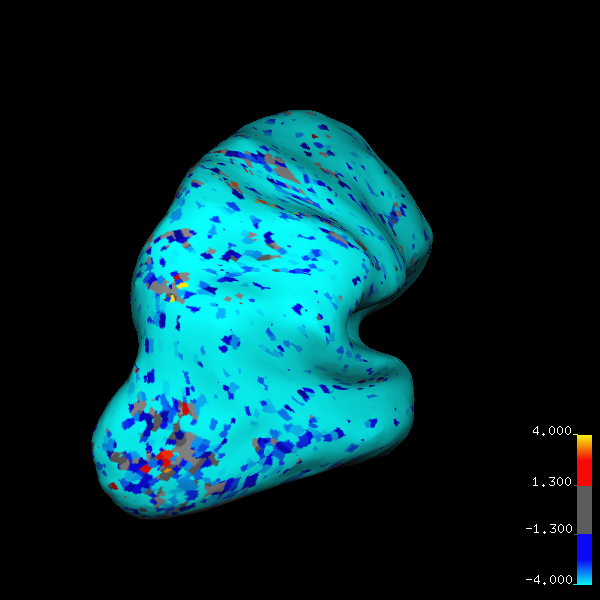
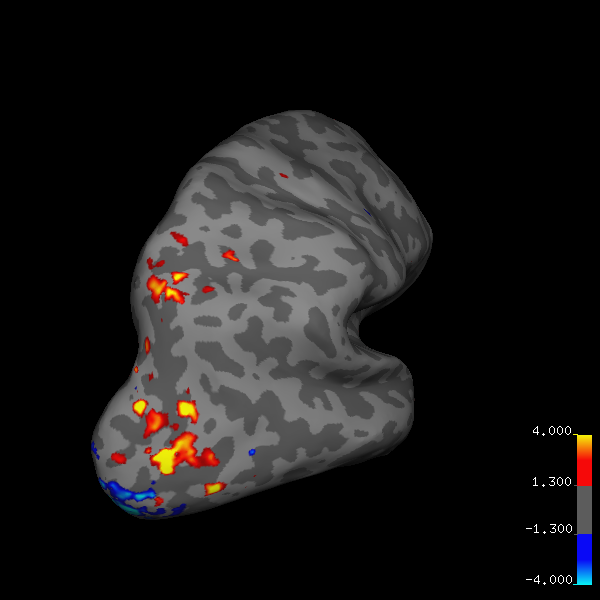

OK, this is a bug in 4.5 in which it ignores the nskip option. This is fixed in version 5.0. If you need to continue with 4.5, you can use a tpexclude file to remove the 1st two time points, something like:
echo "0 2" > 100524AK_infIPS/bold/007/tpexclude.dat echo "0 2" > 100524AK_infIPS/bold/014//tpexclude.dat
mkanalysis-sess -analysis infIPS.new -TR 2 -paradigm loc.dat -designtype blocked -funcstem fmc -motioncor -inorm -nconditions 2 -timewindow 20 -gammafit 2.25 1.25 -noautostimdur -tpexclude tpexclude.dat
I have verified that this works with your data.
doug
Katie Bettencourt wrote:
Hi all, I'm still trying to sort out some problems I've been having with selxavg3-sess in Freesurfer 4.5 on RedHat Linux, CentOs 5.5.
I've tried a bunch of things, but I will provide the simplified process here as a starting point. I have a blocked design where I have 3 conditions, fixation, noise, and shape. Things look good when I compare shape vs noise, but very very bad in an unrealistic way when I compare anything to fixation (shape vs fixation, noise vs fixation, active vs fixation). Attached are the pictures I get. The subjects are not moving much (checked the motion correction output). I tried running the analysis with the -no-whiten flag and it made no difference. When this data is analyzed with Brain Voyager by others in my lab, this problem doesn't exist, and you see appropriate activity for the vs. fixation conditions. When I run data collected with PACE, I don't have this comparison to fixation problem, but I do for nonPACE bold runs.
Commands I ran: mkanalysis-sess -analysis infIPS -TR 2 -paradigm loc.dat -designtype blocked -funcstem fmc -motioncor -runlistfile loc_runs.txt -inorm -nskip 2 -nconditions 2 -timewindow 20 -gammafit 2.25 1.25 -noautostimdur
mkcontrast-sess -analysis infIPS -contrast shape_vs_fix -a 2 -c 0 mkcontrast-sess -analysis infIPS -contrast noise_vs_fix -a 1 -c 0 mkcontrast-sess -analysis infIPS -contrast shape_vs_noise -a 2 -c 1 mkcontrast-sess -analysis infIPS -contrast act_vs_fix -a 2 -a 1 -c 0
selxavg3-sess -sf loc_loc-sess -df loc_loc.dir -analysis infIPS
Any thoughts?
Katie
On Fri, Nov 12, 2010 at 4:19 PM, Katie Bettencourt <kcrum@bu.edu mailto:kcrum@bu.edu> wrote:
This is in blocked designs and in event related gamma designs (I haven't had time to finish sorting out my FIR problems, so that's a different email), but they've all boiled down to essentially these sets of commands: mkanalysis-sess.new -analysis num_loc -TR 2 -paradigm num.dat -designtype blocked -funcstem fmc -runlistfile num_runs.txt -inorm -nconditions 4 -timewindow 20 -gammafit 2.25 1.25 mkcontrast-sess -analysis num_loc -contrast act_vs_fix -a 1 -a 2 -a 3 -a 4 -c 0 mkcontrast-sess -analysis num_loc -contrast lnum_vs_snum -a 1 -c 2 ...etc... preproc-sess -nosmooth -sf num-sess -df num.dir selxavg3-sess -sf num-sess -df num.dir -analysis num_loc -skip -or- selxavg-sess -sf num-sess -df num.dir -analysis num_loc stxgrinder-sess -analysis num_loc -contrast [contrastname here] -sf num-sess -df num.dir I have tried running the same (w/ selxavg3-sess) as above but with using: 1. the -nskip 2 flag in mkanalysis-sess.new to skip the first 2 TRs (no change) 2. using mkanalysis-sess (no .new) with the -no-whiten flag 3. getting rid of the -timewindow flag 4. running stxgrinder-sess and paint-sess after selxavg3-sess to get the sig-0-lh and sig-0-rh files None of these things have had any effect. I've checked the motion parameters and they haven't moved much. The raw data seems fine because it analyzes fine in BrainVoyager (which I don't want to use for a multitude of reasons, but others in my lab do use). I still end up with the entire brain activating and activating strongly for the baseline conditions, but only if the data were acquired using nonPACE BOLD runs and only if I use selxavg3-sess. My PACE data is fine in both. Katie On Fri, Nov 12, 2010 at 3:29 PM, Douglas N Greve <greve@nmr.mgh.harvard.edu <mailto:greve@nmr.mgh.harvard.edu>> wrote: And this is not usging FIR, right? Can you send me your mkanalysis-sess commands for selxavg-sess and selxavg3-sess? Katie Bettencourt wrote: That's ok, we;ve gone back and forth a bit. The real problem is that when I use selxavg3-sess on data collected in non PACE sequences, it looks fine in contrasts that aren't against baseline (the 0 condition in the paradigm files) but when I look at conditions vs baseline (like act-vs-fix) the entire brain shows strong activation for the baseline condition (I had attached pictures originally, but basically imaging a brain that looks pretty much all blue and you get an accurate picture). When I used selxavg-sess instead, I see a little less activation for the comparisons that aren't against baseline, but appropriate pictures when I compare against baseline. As I've said, this data has been analyzed in Brain voyager and looks fine (actually stronger) but doesn't work in Freesurfer right. The activity I see with selxavg3-sess when I compare nonbaseline conditions (ie. shape-vs-noise) appears to be in similar locations in both Freesurfer and BrainVoyager (though again weaker in Freesurfer for same thresholds). It's really just the comparison to baseline that seems to be screwed up. Katie On Fri, Nov 12, 2010 at 3:11 PM, Douglas N Greve <greve@nmr.mgh.harvard.edu <mailto:greve@nmr.mgh.harvard.edu> <mailto:greve@nmr.mgh.harvard.edu <mailto:greve@nmr.mgh.harvard.edu>>> wrote: sorry, I've lost track of what the problem is exactly. If I remember: you analyze using selxavg-sess and brain voyager and things look ok, but in selxavg3-sess you lose activation? doug Katie Bettencourt wrote: I tried it with the -no-whiten flag and again there is no difference between the -no-whiten and the normal version. Any other thoughts? The only thing that seems to come up is that when the data is collected with a PACE sequence I don't get this problem, but a standard BOLD sequence does. I would assume it was motion or something, but the motion parameters are small and the data works fine in brain voyager. The only thing I think that is done different in brain voyager is that they skip the first 2 TRs (and each experiment starts with fixation), I tried to do that with the -nskip 2 option, do I need to also use the -tpef function or is that only if your paradigm file doesn't start at 0? Katie On Fri, Nov 12, 2010 at 1:02 PM, Katie Bettencourt <kcrum@bu.edu <mailto:kcrum@bu.edu> <mailto:kcrum@bu.edu <mailto:kcrum@bu.edu>> <mailto:kcrum@bu.edu <mailto:kcrum@bu.edu> <mailto:kcrum@bu.edu <mailto:kcrum@bu.edu>>>> wrote: No, it was with .new should I be using mkanalysis-sess usually instead of mkanalysis-sess.new? What exactly is the difference? Katie On Fri, Nov 12, 2010 at 1:00 PM, Douglas N Greve <greve@nmr.mgh.harvard.edu <mailto:greve@nmr.mgh.harvard.edu> <mailto:greve@nmr.mgh.harvard.edu <mailto:greve@nmr.mgh.harvard.edu>> <mailto:greve@nmr.mgh.harvard.edu <mailto:greve@nmr.mgh.harvard.edu> <mailto:greve@nmr.mgh.harvard.edu <mailto:greve@nmr.mgh.harvard.edu>>>> wrote: Is it in mkanalysis-sess (without the ".new")? Katie Bettencourt wrote: I tried using the no-whiten flag with mkanalysis.new and it said there was no such flag and I can't find any reference to it on the wiki. Katie On Wed, Nov 10, 2010 at 5:31 PM, Douglas N Greve <greve@nmr.mgh.harvard.edu <mailto:greve@nmr.mgh.harvard.edu> <mailto:greve@nmr.mgh.harvard.edu <mailto:greve@nmr.mgh.harvard.edu>> <mailto:greve@nmr.mgh.harvard.edu <mailto:greve@nmr.mgh.harvard.edu> <mailto:greve@nmr.mgh.harvard.edu <mailto:greve@nmr.mgh.harvard.edu>>> <mailto:greve@nmr.mgh.harvard.edu <mailto:greve@nmr.mgh.harvard.edu> <mailto:greve@nmr.mgh.harvard.edu <mailto:greve@nmr.mgh.harvard.edu>> <mailto:greve@nmr.mgh.harvard.edu <mailto:greve@nmr.mgh.harvard.edu> <mailto:greve@nmr.mgh.harvard.edu <mailto:greve@nmr.mgh.harvard.edu>>>>> wrote: Can you create a new analysis using the -no-whiten flag and re-run selxavg3-sess? For the other error, you need to select a prestim and timewindow that are integer multiples of 1.5. doug Katie Bettencourt wrote: So this data has been previously analyzed in BrainVoyager, and there is no problems with it, subject movement is very low (< 2mm across all runs and timepoints), though I did notice that this problem does not happen when I analyze data collected with PACE sequences, and not with ones that do not use PACE. I tried running the selxavg3-sess with the -svres-unwhitened (which is the only whitening related command I could see), but it made no difference. I'm not sure how to look at the raw data precisely, but I do know it works correctly in BV. Any other thoughts on what's going wrong here? Can I at least trust the data that isn't against baseline in this case? It looks similar, though weaker to the same data analyzed with BrainVoyager (not sure why I keep getting weaker activation in Freesurfer than Brainvoyager, but that's a different consideration). Somewhat relatedly, when I try to run a FIR analysis with selxavg3-sess (instead of selxavg-sess): mkanalysis-sess.new -analysis supIPS_loc-fir -TR 1.5 -paradigm supIPS.dat -designtype event-related -funcstem fmc -motioncor -runlistfile supIPSruns.txt -inorm -nskip 2 -nconditions 6 -tprestim 2 -timewindow 20 selxavg3-sess -s 101103TM -df supIPS.dir -analysis supIPS_loc-fir I get this output/error: selxavg3-sess logfile is /home/kcb/mri-space/supIPS_loc/log/selxavg3-sess-bold-supIPS_loc-fir-101110150643.log -------------------------------------------------------------- ------------------------------------------- /home/kcb/mri-space/101103TM_supIPS Wed Nov 10 15:06:43 EST 2010 anadir = /home/kcb/mri-space/101103TM_supIPS/bold/supIPS_loc-fir ------------------------------------------ ------- matlab output -------------------- Warning: Unable to open display 'iconic'. You will not be able to display graphics on the screen. < M A T L A B (R) > Copyright 1984-2010 The MathWorks, Inc. Version 7.10.0.499 (R2010a) 64-bit (glnxa64) February 5, 2010 To get started, type one of these: helpwin, helpdesk, or demo. For product information, visit www.mathworks.com <http://www.mathworks.com> <http://www.mathworks.com> <http://www.mathworks.com> <http://www.mathworks.com> <http://www.mathworks.com>. >> >> >> >> >> >> >> /usr/local/freesurfer4.5/fsfast/toolbox/fast_selxavg3.m >> >> >> >> >> >> >> >> >> >> >> >> >> >> >> >> >> >> >> >> $Id: fast_selxavg3.m,v 1.55.2.8 2009/04/17 20:09:46 greve Exp $ outtop = /home/kcb/mri-space Extension format = nii UseFloat = 0 INFO: acfbins is not set, setting to 10 INFO: mask is not set, setting to brain 1 1_vs_fix.mat 2 2_vs_1.mat 3 2_vs_fix.mat 4 3_vs_1.mat 5 3_vs_2.mat 6 3_vs_fix.mat 7 4_vs_1.mat 8 4_vs_2.mat 9 4_vs_3.mat 10 4_vs_fix.mat 11 643_vs_2-delay.mat 12 643_vs_2.mat 13 6_vs_1.mat 14 6_vs_2.mat 15 6_vs_3.mat 16 6_vs_4.mat 17 6_vs_fix.mat 18 act_vs_fix.mat 19 allvres.mat 20 omnibus.mat 21 zallvres.mat 22 zomnibus.mat ERROR: psdmin=-2 not int mult of dpsd=1.5 ERROR: psdmax=17.5 not int mult of dpsd=1.5 ??? Index exceeds matrix dimensions. Error in ==> fast_condctrstmtx at 102 Rpost = diag(WDelays(nnpost)); % Diagonal PostStim Weights Error in ==> flac_conmat at 64 R = fast_condctrstmtx(dpsd,TW,-psdmin,con.sumevreg,WDelay,1); Error in ==> fast_ldanaflac at 474 flactmp = flac_conmat(flac,nthcon); Error in ==> fast_selxavg3 at 85 flac0 = fast_ldanaflac(analysis); >> ------------------------------------------ ERROR: fast_selxavg3() failed\n Katie On Wed, Nov 10, 2010 at 11:03 AM, Douglas N Greve <greve@nmr.mgh.harvard.edu <mailto:greve@nmr.mgh.harvard.edu> <mailto:greve@nmr.mgh.harvard.edu <mailto:greve@nmr.mgh.harvard.edu>> <mailto:greve@nmr.mgh.harvard.edu <mailto:greve@nmr.mgh.harvard.edu> <mailto:greve@nmr.mgh.harvard.edu <mailto:greve@nmr.mgh.harvard.edu>>> <mailto:greve@nmr.mgh.harvard.edu <mailto:greve@nmr.mgh.harvard.edu> <mailto:greve@nmr.mgh.harvard.edu <mailto:greve@nmr.mgh.harvard.edu>> <mailto:greve@nmr.mgh.harvard.edu <mailto:greve@nmr.mgh.harvard.edu> <mailto:greve@nmr.mgh.harvard.edu <mailto:greve@nmr.mgh.harvard.edu>>>> <mailto:greve@nmr.mgh.harvard.edu <mailto:greve@nmr.mgh.harvard.edu> <mailto:greve@nmr.mgh.harvard.edu <mailto:greve@nmr.mgh.harvard.edu>> <mailto:greve@nmr.mgh.harvard.edu <mailto:greve@nmr.mgh.harvard.edu> <mailto:greve@nmr.mgh.harvard.edu <mailto:greve@nmr.mgh.harvard.edu>>> <mailto:greve@nmr.mgh.harvard.edu <mailto:greve@nmr.mgh.harvard.edu> <mailto:greve@nmr.mgh.harvard.edu <mailto:greve@nmr.mgh.harvard.edu>> <mailto:greve@nmr.mgh.harvard.edu <mailto:greve@nmr.mgh.harvard.edu> <mailto:greve@nmr.mgh.harvard.edu <mailto:greve@nmr.mgh.harvard.edu>>>>>> wrote: I have no idea what is happening, but I can suggest a few checks. Have you looked at the motion correction plots? Have you looked at the raw data? Another thing to try is to turn off whitening when you make the analysis for selxavg3-sess. doug Katie Bettencourt wrote: > Hi all, > > I'm still trying to figure out what's going on with the differences > I'm getting between selxavg-sess and selxavg3-sess. I"m using > freesurfer4.5. I was using selxavg3-sess (as suggested on the wiki) > but I was getting weird activation maps when I compared any condition > vs. baseline, where most of the brain was more activity for baseline > (which was fixation) - see the attached picture for > act-fix-gamma-selxavg3-rh.png. So I ran selxavg-sess which was what > I used to run with an older version of freesurfer, and when I did this > I got a more appropriate picture - see act-fix-gamma-rh.png > > The experiment starts with fixation (baseline) so I tried running the > analysis with and without skipping the first 2 TRs to account for the > BOLD spike, but it makes no difference in the activation map. > > These are essentially the commands I ran: > mkanalysis-sess.new -analysis loc_loc -TR 2 -paradigm loc.dat > -designtype blocked -funcstem fmc -runlistfile loc_runs.txt -inorm > -nconditions 2 -timewindow 20 -gammafit 2.25 1.25 > > mkcontrast-sess -analysis loc_loc -contrast shape_vs_fix -a 2 -c 0 > > selxavg3-sess -s 101006SP_loc_loc -df loc_loc.dir -analysis loc_loc > > > Thoughts? Or should I just not use selxavg3-sess? > > Katie > > > ---------- Forwarded message ---------- > From: *Katie Bettencourt* <kcrum@bu.edu <mailto:kcrum@bu.edu> <mailto:kcrum@bu.edu <mailto:kcrum@bu.edu>> <mailto:kcrum@bu.edu <mailto:kcrum@bu.edu> <mailto:kcrum@bu.edu <mailto:kcrum@bu.edu>>> <mailto:kcrum@bu.edu <mailto:kcrum@bu.edu> <mailto:kcrum@bu.edu <mailto:kcrum@bu.edu>> <mailto:kcrum@bu.edu <mailto:kcrum@bu.edu> <mailto:kcrum@bu.edu <mailto:kcrum@bu.edu>>>> <mailto:kcrum@bu.edu <mailto:kcrum@bu.edu> <mailto:kcrum@bu.edu <mailto:kcrum@bu.edu>> <mailto:kcrum@bu.edu <mailto:kcrum@bu.edu> <mailto:kcrum@bu.edu <mailto:kcrum@bu.edu>>> <mailto:kcrum@bu.edu <mailto:kcrum@bu.edu> <mailto:kcrum@bu.edu <mailto:kcrum@bu.edu>> <mailto:kcrum@bu.edu <mailto:kcrum@bu.edu> <mailto:kcrum@bu.edu <mailto:kcrum@bu.edu>>>>> <mailto:kcrum@bu.edu <mailto:kcrum@bu.edu> <mailto:kcrum@bu.edu <mailto:kcrum@bu.edu>> <mailto:kcrum@bu.edu <mailto:kcrum@bu.edu> <mailto:kcrum@bu.edu <mailto:kcrum@bu.edu>>> <mailto:kcrum@bu.edu <mailto:kcrum@bu.edu> <mailto:kcrum@bu.edu <mailto:kcrum@bu.edu>> <mailto:kcrum@bu.edu <mailto:kcrum@bu.edu> <mailto:kcrum@bu.edu <mailto:kcrum@bu.edu>>>> <mailto:kcrum@bu.edu <mailto:kcrum@bu.edu> <mailto:kcrum@bu.edu <mailto:kcrum@bu.edu>> <mailto:kcrum@bu.edu <mailto:kcrum@bu.edu> <mailto:kcrum@bu.edu <mailto:kcrum@bu.edu>>> <mailto:kcrum@bu.edu <mailto:kcrum@bu.edu> <mailto:kcrum@bu.edu <mailto:kcrum@bu.edu>> <mailto:kcrum@bu.edu <mailto:kcrum@bu.edu> <mailto:kcrum@bu.edu <mailto:kcrum@bu.edu>>>>>>> > Date: Tue, Nov 2, 2010 at 2:31 PM > Subject: Questions about event related processing and selxavg-sess and > selxavg3-sess > To: freesurfer maillist <freesurfer@nmr.mgh.harvard.edu <mailto:freesurfer@nmr.mgh.harvard.edu> <mailto:freesurfer@nmr.mgh.harvard.edu <mailto:freesurfer@nmr.mgh.harvard.edu>> <mailto:freesurfer@nmr.mgh.harvard.edu <mailto:freesurfer@nmr.mgh.harvard.edu> <mailto:freesurfer@nmr.mgh.harvard.edu <mailto:freesurfer@nmr.mgh.harvard.edu>>> <mailto:freesurfer@nmr.mgh.harvard.edu <mailto:freesurfer@nmr.mgh.harvard.edu> <mailto:freesurfer@nmr.mgh.harvard.edu <mailto:freesurfer@nmr.mgh.harvard.edu>> <mailto:freesurfer@nmr.mgh.harvard.edu <mailto:freesurfer@nmr.mgh.harvard.edu> <mailto:freesurfer@nmr.mgh.harvard.edu <mailto:freesurfer@nmr.mgh.harvard.edu>>>> <mailto:freesurfer@nmr.mgh.harvard.edu <mailto:freesurfer@nmr.mgh.harvard.edu> <mailto:freesurfer@nmr.mgh.harvard.edu <mailto:freesurfer@nmr.mgh.harvard.edu>> <mailto:freesurfer@nmr.mgh.harvard.edu <mailto:freesurfer@nmr.mgh.harvard.edu> <mailto:freesurfer@nmr.mgh.harvard.edu <mailto:freesurfer@nmr.mgh.harvard.edu>>> <mailto:freesurfer@nmr.mgh.harvard.edu <mailto:freesurfer@nmr.mgh.harvard.edu> <mailto:freesurfer@nmr.mgh.harvard.edu <mailto:freesurfer@nmr.mgh.harvard.edu>> <mailto:freesurfer@nmr.mgh.harvard.edu <mailto:freesurfer@nmr.mgh.harvard.edu> <mailto:freesurfer@nmr.mgh.harvard.edu <mailto:freesurfer@nmr.mgh.harvard.edu>>>>> > <mailto:freesurfer@nmr.mgh.harvard.edu <mailto:freesurfer@nmr.mgh.harvard.edu> <mailto:freesurfer@nmr.mgh.harvard.edu <mailto:freesurfer@nmr.mgh.harvard.edu>> <mailto:freesurfer@nmr.mgh.harvard.edu <mailto:freesurfer@nmr.mgh.harvard.edu> <mailto:freesurfer@nmr.mgh.harvard.edu <mailto:freesurfer@nmr.mgh.harvard.edu>>> <mailto:freesurfer@nmr.mgh.harvard.edu <mailto:freesurfer@nmr.mgh.harvard.edu> <mailto:freesurfer@nmr.mgh.harvard.edu <mailto:freesurfer@nmr.mgh.harvard.edu>> <mailto:freesurfer@nmr.mgh.harvard.edu <mailto:freesurfer@nmr.mgh.harvard.edu> <mailto:freesurfer@nmr.mgh.harvard.edu <mailto:freesurfer@nmr.mgh.harvard.edu>>>> <mailto:freesurfer@nmr.mgh.harvard.edu <mailto:freesurfer@nmr.mgh.harvard.edu> <mailto:freesurfer@nmr.mgh.harvard.edu <mailto:freesurfer@nmr.mgh.harvard.edu>> <mailto:freesurfer@nmr.mgh.harvard.edu <mailto:freesurfer@nmr.mgh.harvard.edu> <mailto:freesurfer@nmr.mgh.harvard.edu <mailto:freesurfer@nmr.mgh.harvard.edu>>> <mailto:freesurfer@nmr.mgh.harvard.edu <mailto:freesurfer@nmr.mgh.harvard.edu> <mailto:freesurfer@nmr.mgh.harvard.edu <mailto:freesurfer@nmr.mgh.harvard.edu>> <mailto:freesurfer@nmr.mgh.harvard.edu <mailto:freesurfer@nmr.mgh.harvard.edu> <mailto:freesurfer@nmr.mgh.harvard.edu <mailto:freesurfer@nmr.mgh.harvard.edu>>>>>>> > > > Hi all, > > I've been trying to analyses both an event related and block design > experiments and have noticed a couple things that are confusing me and > I would appreciate any help anyone could give me. > > 1. In trying do the event-related analysis, I'm am a bit confused by > the FIR vs Gamma analysis and the use of the time window and tprestim > in the FIR analysis. I have an experiment with 6 set size conditions > and 1 fixation condition. each trial is 6s long with a TR of 1.5 > > I have run both of these commands: > > mkanalysis-sess.new -analysis supIPS_loc -TR 1.5 -paradigm supIPS.dat > -designtype event-related -funcstem fmc -motioncor -runlistfile > supIPSruns.txt -inorm -nskip 2 -nconditions 6 -gammafit 2.25 1.25 > > mkanalysis-sess.new -analysis supIPS_loc -TR 1.5 -paradigm supIPS.dat > -designtype event-related -funcstem fmc -motioncor -runlistfile > supIPSruns.txt -inorm -nskip 2 -nconditions 6 -tprestim 2 -timewindow 20 > > > The FIR gives me a time course window, which makes me think that > perhaps that is the one I want to use, but it shows very little > activation. This data has been previously analyzed in Brain Voyager, > so I know it's not a case of the conditions not actually causing > activation, but for some reason, the FIR analysis doesn't show any. > I'm not sure if this is due to a bad time window/tprestim settings, or > something else. However the gamma fit analysis shows a bunch of > activity where I expect to see it, but no time course window. > (attached are pngs of the differences for the act_vs_fixation > comparison). > > > 2. In addition, in both the event related (gamma) and a normal block > design (different experiment) I get very different results (at least > for certain comparisons) depending on whether I use selxavg-sess (with > stxgrinder-sess for each contrast) or selxavg3-sess. The differences > are shown in the attached pngs (act_vs_fix-gamma.png (which is the > selxavg-sess and stxgrinder-sess analysis and > act_vs_fix-gamma-selxavg3). In the block design, both selxavg3 and > selxavg (+stxgrinder) give me very similar activation when comparing > two non-null conditions (ie. shape_vs_noise) but very different (and > similar to the differences in the attached pictures) activations when > comparing against the null (ie shape_vs_fix or noise_vs_fix). What am > I doing wrong here? > > Thanks for your help! > > Katie > > > ------------------------------------------------------------------------ > > > ------------------------------------------------------------------------ > > ------------------------------------------------------------------------ > > _______________________________________________ > Freesurfer mailing list > Freesurfer@nmr.mgh.harvard.edu <mailto:Freesurfer@nmr.mgh.harvard.edu> <mailto:Freesurfer@nmr.mgh.harvard.edu <mailto:Freesurfer@nmr.mgh.harvard.edu>> <mailto:Freesurfer@nmr.mgh.harvard.edu <mailto:Freesurfer@nmr.mgh.harvard.edu> <mailto:Freesurfer@nmr.mgh.harvard.edu <mailto:Freesurfer@nmr.mgh.harvard.edu>>> <mailto:Freesurfer@nmr.mgh.harvard.edu <mailto:Freesurfer@nmr.mgh.harvard.edu> <mailto:Freesurfer@nmr.mgh.harvard.edu <mailto:Freesurfer@nmr.mgh.harvard.edu>> <mailto:Freesurfer@nmr.mgh.harvard.edu <mailto:Freesurfer@nmr.mgh.harvard.edu> <mailto:Freesurfer@nmr.mgh.harvard.edu <mailto:Freesurfer@nmr.mgh.harvard.edu>>>> <mailto:Freesurfer@nmr.mgh.harvard.edu <mailto:Freesurfer@nmr.mgh.harvard.edu> <mailto:Freesurfer@nmr.mgh.harvard.edu <mailto:Freesurfer@nmr.mgh.harvard.edu>> <mailto:Freesurfer@nmr.mgh.harvard.edu <mailto:Freesurfer@nmr.mgh.harvard.edu> <mailto:Freesurfer@nmr.mgh.harvard.edu <mailto:Freesurfer@nmr.mgh.harvard.edu>>> <mailto:Freesurfer@nmr.mgh.harvard.edu <mailto:Freesurfer@nmr.mgh.harvard.edu> <mailto:Freesurfer@nmr.mgh.harvard.edu <mailto:Freesurfer@nmr.mgh.harvard.edu>> <mailto:Freesurfer@nmr.mgh.harvard.edu <mailto:Freesurfer@nmr.mgh.harvard.edu> <mailto:Freesurfer@nmr.mgh.harvard.edu <mailto:Freesurfer@nmr.mgh.harvard.edu>>>>> > https://mail.nmr.mgh.harvard.edu/mailman/listinfo/freesurfer -- Douglas N. Greve, Ph.D. MGH-NMR Center greve@nmr.mgh.harvard.edu <mailto:greve@nmr.mgh.harvard.edu> <mailto:greve@nmr.mgh.harvard.edu <mailto:greve@nmr.mgh.harvard.edu>> <mailto:greve@nmr.mgh.harvard.edu <mailto:greve@nmr.mgh.harvard.edu> <mailto:greve@nmr.mgh.harvard.edu <mailto:greve@nmr.mgh.harvard.edu>>> <mailto:greve@nmr.mgh.harvard.edu <mailto:greve@nmr.mgh.harvard.edu> <mailto:greve@nmr.mgh.harvard.edu <mailto:greve@nmr.mgh.harvard.edu>> <mailto:greve@nmr.mgh.harvard.edu <mailto:greve@nmr.mgh.harvard.edu> <mailto:greve@nmr.mgh.harvard.edu <mailto:greve@nmr.mgh.harvard.edu>>>> <mailto:greve@nmr.mgh.harvard.edu <mailto:greve@nmr.mgh.harvard.edu> <mailto:greve@nmr.mgh.harvard.edu <mailto:greve@nmr.mgh.harvard.edu>> <mailto:greve@nmr.mgh.harvard.edu <mailto:greve@nmr.mgh.harvard.edu> <mailto:greve@nmr.mgh.harvard.edu <mailto:greve@nmr.mgh.harvard.edu>>> <mailto:greve@nmr.mgh.harvard.edu <mailto:greve@nmr.mgh.harvard.edu> <mailto:greve@nmr.mgh.harvard.edu <mailto:greve@nmr.mgh.harvard.edu>> <mailto:greve@nmr.mgh.harvard.edu <mailto:greve@nmr.mgh.harvard.edu> <mailto:greve@nmr.mgh.harvard.edu <mailto:greve@nmr.mgh.harvard.edu>>>>> Phone Number: 617-724-2358 Fax: 617-726-7422 Bugs: surfer.nmr.mgh.harvard.edu/fswiki/BugReporting <http://surfer.nmr.mgh.harvard.edu/fswiki/BugReporting> <http://surfer.nmr.mgh.harvard.edu/fswiki/BugReporting> <http://surfer.nmr.mgh.harvard.edu/fswiki/BugReporting> <http://surfer.nmr.mgh.harvard.edu/fswiki/BugReporting> <http://surfer.nmr.mgh.harvard.edu/fswiki/BugReporting> FileDrop: www.nmr.mgh.harvard.edu/facility/filedrop/index.html <http://www.nmr.mgh.harvard.edu/facility/filedrop/index.html> <http://www.nmr.mgh.harvard.edu/facility/filedrop/index.html> <http://www.nmr.mgh.harvard.edu/facility/filedrop/index.html> <http://www.nmr.mgh.harvard.edu/facility/filedrop/index.html> <http://www.nmr.mgh.harvard.edu/facility/filedrop/index.html> _______________________________________________ Freesurfer mailing list Freesurfer@nmr.mgh.harvard.edu <mailto:Freesurfer@nmr.mgh.harvard.edu> <mailto:Freesurfer@nmr.mgh.harvard.edu <mailto:Freesurfer@nmr.mgh.harvard.edu>> <mailto:Freesurfer@nmr.mgh.harvard.edu <mailto:Freesurfer@nmr.mgh.harvard.edu> <mailto:Freesurfer@nmr.mgh.harvard.edu <mailto:Freesurfer@nmr.mgh.harvard.edu>>> <mailto:Freesurfer@nmr.mgh.harvard.edu <mailto:Freesurfer@nmr.mgh.harvard.edu> <mailto:Freesurfer@nmr.mgh.harvard.edu <mailto:Freesurfer@nmr.mgh.harvard.edu>> <mailto:Freesurfer@nmr.mgh.harvard.edu <mailto:Freesurfer@nmr.mgh.harvard.edu> <mailto:Freesurfer@nmr.mgh.harvard.edu <mailto:Freesurfer@nmr.mgh.harvard.edu>>>> <mailto:Freesurfer@nmr.mgh.harvard.edu <mailto:Freesurfer@nmr.mgh.harvard.edu> <mailto:Freesurfer@nmr.mgh.harvard.edu <mailto:Freesurfer@nmr.mgh.harvard.edu>> <mailto:Freesurfer@nmr.mgh.harvard.edu <mailto:Freesurfer@nmr.mgh.harvard.edu> <mailto:Freesurfer@nmr.mgh.harvard.edu <mailto:Freesurfer@nmr.mgh.harvard.edu>>> <mailto:Freesurfer@nmr.mgh.harvard.edu <mailto:Freesurfer@nmr.mgh.harvard.edu> <mailto:Freesurfer@nmr.mgh.harvard.edu <mailto:Freesurfer@nmr.mgh.harvard.edu>> <mailto:Freesurfer@nmr.mgh.harvard.edu <mailto:Freesurfer@nmr.mgh.harvard.edu> <mailto:Freesurfer@nmr.mgh.harvard.edu <mailto:Freesurfer@nmr.mgh.harvard.edu>>>>> https://mail.nmr.mgh.harvard.edu/mailman/listinfo/freesurfer The information in this e-mail is intended only for the person to whom it is addressed. If you believe this e-mail was sent to you in error and the e-mail contains patient information, please contact the Partners Compliance HelpLine at http://www.partners.org/complianceline . If the e-mail was sent to you in error but does not contain patient information, please contact the sender and properly dispose of the e-mail. -- Douglas N. Greve, Ph.D. MGH-NMR Center greve@nmr.mgh.harvard.edu <mailto:greve@nmr.mgh.harvard.edu> <mailto:greve@nmr.mgh.harvard.edu <mailto:greve@nmr.mgh.harvard.edu>> <mailto:greve@nmr.mgh.harvard.edu <mailto:greve@nmr.mgh.harvard.edu> <mailto:greve@nmr.mgh.harvard.edu <mailto:greve@nmr.mgh.harvard.edu>>> <mailto:greve@nmr.mgh.harvard.edu <mailto:greve@nmr.mgh.harvard.edu> <mailto:greve@nmr.mgh.harvard.edu <mailto:greve@nmr.mgh.harvard.edu>> <mailto:greve@nmr.mgh.harvard.edu <mailto:greve@nmr.mgh.harvard.edu> <mailto:greve@nmr.mgh.harvard.edu <mailto:greve@nmr.mgh.harvard.edu>>>> Phone Number: 617-724-2358 Fax: 617-726-7422 Bugs: surfer.nmr.mgh.harvard.edu/fswiki/BugReporting <http://surfer.nmr.mgh.harvard.edu/fswiki/BugReporting> <http://surfer.nmr.mgh.harvard.edu/fswiki/BugReporting> <http://surfer.nmr.mgh.harvard.edu/fswiki/BugReporting> <http://surfer.nmr.mgh.harvard.edu/fswiki/BugReporting> FileDrop: www.nmr.mgh.harvard.edu/facility/filedrop/index.html <http://www.nmr.mgh.harvard.edu/facility/filedrop/index.html> <http://www.nmr.mgh.harvard.edu/facility/filedrop/index.html> <http://www.nmr.mgh.harvard.edu/facility/filedrop/index.html> <http://www.nmr.mgh.harvard.edu/facility/filedrop/index.html> -- Douglas N. Greve, Ph.D. MGH-NMR Center greve@nmr.mgh.harvard.edu <mailto:greve@nmr.mgh.harvard.edu> <mailto:greve@nmr.mgh.harvard.edu <mailto:greve@nmr.mgh.harvard.edu>> <mailto:greve@nmr.mgh.harvard.edu <mailto:greve@nmr.mgh.harvard.edu> <mailto:greve@nmr.mgh.harvard.edu <mailto:greve@nmr.mgh.harvard.edu>>> Phone Number: 617-724-2358 Fax: 617-726-7422 Bugs: surfer.nmr.mgh.harvard.edu/fswiki/BugReporting <http://surfer.nmr.mgh.harvard.edu/fswiki/BugReporting> <http://surfer.nmr.mgh.harvard.edu/fswiki/BugReporting> <http://surfer.nmr.mgh.harvard.edu/fswiki/BugReporting> FileDrop: www.nmr.mgh.harvard.edu/facility/filedrop/index.html <http://www.nmr.mgh.harvard.edu/facility/filedrop/index.html> <http://www.nmr.mgh.harvard.edu/facility/filedrop/index.html> <http://www.nmr.mgh.harvard.edu/facility/filedrop/index.html> -- Douglas N. Greve, Ph.D. MGH-NMR Center greve@nmr.mgh.harvard.edu <mailto:greve@nmr.mgh.harvard.edu> <mailto:greve@nmr.mgh.harvard.edu <mailto:greve@nmr.mgh.harvard.edu>> Phone Number: 617-724-2358 Fax: 617-726-7422 Bugs: surfer.nmr.mgh.harvard.edu/fswiki/BugReporting <http://surfer.nmr.mgh.harvard.edu/fswiki/BugReporting> <http://surfer.nmr.mgh.harvard.edu/fswiki/BugReporting> FileDrop: www.nmr.mgh.harvard.edu/facility/filedrop/index.html <http://www.nmr.mgh.harvard.edu/facility/filedrop/index.html> <http://www.nmr.mgh.harvard.edu/facility/filedrop/index.html> -- Douglas N. Greve, Ph.D. MGH-NMR Center greve@nmr.mgh.harvard.edu <mailto:greve@nmr.mgh.harvard.edu> Phone Number: 617-724-2358 Fax: 617-726-7422 Bugs: surfer.nmr.mgh.harvard.edu/fswiki/BugReporting <http://surfer.nmr.mgh.harvard.edu/fswiki/BugReporting> FileDrop: www.nmr.mgh.harvard.edu/facility/filedrop/index.html <http://www.nmr.mgh.harvard.edu/facility/filedrop/index.html>
freesurfer@nmr.mgh.harvard.edu
-
 Douglas N Greve
 -
 Katie Bettencourt